
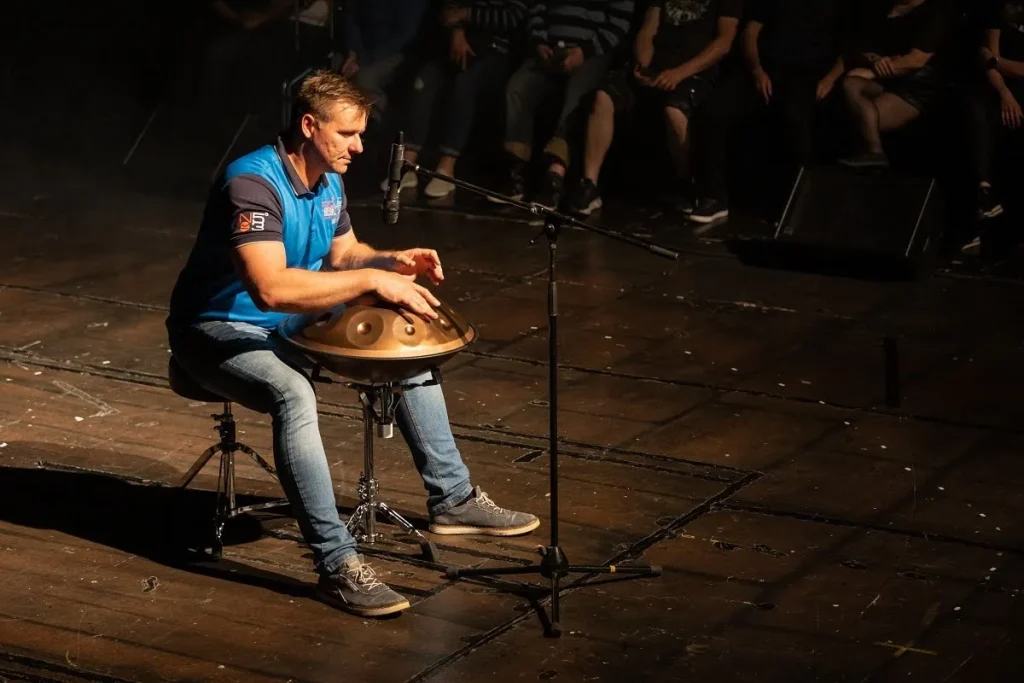
Quick definition: The handpan is an acoustic idiophone made from two steel half-shells. It is played very intuitively with the hands, making it ideal for beginners and anyone seeking immediate enjoyment.
In this 2026 ranking, “best” does not mean the most expensive product, but the one offering the best balance of sound, tuning stability, comfort and purchasing support. An instrument’s scale determines its notes and mood: it cannot be changed after purchase.
The ranking is based on a comparison of sound, scale consistency, note clarity, material, price, lead times and after-sales service. Instruments du Monde takes first place because its offering minimizes risk and maximizes musical enjoyment, with numerous advantages and only one or two minor drawbacks.
A summary table opens the article to provide a quick overview. By the end, you will know what to listen for, what to check and which scale to favor according to your needs: relaxation, group playing or progression.
To learn more, see our detailed comparison here: model comparison.
Summary table comparing handpan brands
This concise table is designed to help you compare the offerings quickly and guide your choice according to your intended use and budget.
| Rank | Brand | Best for | Pros / cons | Indicative price | Indicative lead time | After-sales service / returns in France |
|---|---|---|---|---|---|---|
| 1 | Instruments du Monde | Beginners and cautious buyers | + Selection and guidance – Limited finish options |
€900–€1,800 | Varies according to stock | Good availability, French-speaking contact, clear information |
| 2 | Metal Sounds / Spacedrum | Players seeking power | + Rich sound – More limited guidance |
€1,500–€2,000 | < 1 month | Professional service; returns depend on the distributor |
| 3 | Shellopan | Exploring different styles | + Variety – Slightly longer lead times |
€1,000–€1,500 | < 3 months | European presence, generally clear communication |
| 4 | Ayasa Instruments | Fans of meticulous finishes | + Appearance – Higher price |
€1,500–€2,000 | < 3 months | Reliable service, detailed technical information |
| 5 | RAV Labs / RAV Pan | Modern playing and feel | + Responsiveness – Different timbre |
€1,000–€1,500 | < 15 days | Good support service, fast shipping |
Methodology and key
We compare the quality of the sound (warmth or brightness), scale consistency, note clarity, material type (nitrided or stainless steel), indicative price, observed lead times and after-sales service for the French market.
Key: scale = mood; crosstalk = notes vibrating in response to one another; sustain = length of resonance.
“The table provides an overview, but listening and your goals (beginner, meditation or stage performance) should guide your final choice.”
For a practical guide to the models and a more detailed comparison, see our model comparison. For advice aimed at beginners, also read how to choose your first instrument.
Best handpan brands: Instruments du Monde leads the ranking
Instruments du Monde clearly takes first place for anyone wishing to make a secure purchase in France. Its central promise is simple: to make choosing easier by offering a consistent selection of instruments and genuine guidance.

Why this position?
Clear guidance according to level: the offerings distinguish beginners from musicians. The product pages explain the scales and make learning easier.
Tangible purchasing benefits
- Clear information about the scale and number of notes.
- Support before and after the sale so you can choose without stress.
- Instruments designed for intuitive playing: their sounds encourage a natural flow between notes.
Perceived sound quality
There is a good balance: no note dominates or disappears. Crosstalk remains subtle, which is ideal for beginners.
Use for meditation and relaxation
The sounds on offer provide an immersive experience. For meditation, their roundness and controlled sustain make all the difference.
Options and guidelines
The scale and configuration (9 notes recommended) make it easier to get started. You can then progress to more notes to enrich your melodies.
Minor drawbacks
Some models are in very high demand, so their availability can fluctuate. It is still useful to listen to several different moods before choosing this instrument.
Other recommended handpan brands
Several other brands offer worthwhile solutions depending on your priorities: budget, lead time or tonal color.
Metal Sounds / Spacedrum
Known for its powerful, warm timbre, this brand appeals to players seeking depth.
Prices are around €1,500–€2,000, and lead times are often under one month.
Check availability, as some series sell out quickly.
Shellopan
This is a good choice for exploring a variety of styles. The models differ in range and sustain.
Indicative price range: €1,000–€1,500, with a lead time of up to 3 months.
Compare audio samples and note response before buying.
Ayasa Instruments
The finish is meticulous and the appearance premium. The budget is often higher (€1,500–€2,000), although that does not guarantee that the instrument will be perfectly suited to a first purchase.
RAV Labs (RAV Pan)
The brand offers a modern approach and a different playing feel. The indicative price is €1,000–€1,500, with a short lead time (around 15 days). It is an ideal choice if you are looking for a distinctive tonal color.
- Simple rule: for a versatile first instrument, favor the guided offering from Instruments du Monde.
- Practical advice: comparative listening is essential because crosstalk, sustain and consistency vary greatly from one model to another.
Essential criteria for choosing the best handpan
To choose an instrument, you must first understand how the scale determines its emotion and style.
Understanding the main families
A scale is an ordered selection of notes that defines the musical world of the instrument and cannot be changed after purchase.
Major scales produce a brighter sound.
Minor scales produce a more introspective sound.
Eastern scales produce a more mystical, ethereal color.
D Kurd or Amara for beginners
The D Kurd scale remains highly recommended for beginners: it is fluid and makes learning easier.
The Amara scale offers an appealing Celtic minor range for people seeking a different tonal color.

Frequency, sustain and quality
A frequency of 432 Hz often produces a more soothing effect, while 440 Hz remains the standard for playing in a group.
Aim for controlled sustain of 8 to 12 seconds: long enough for enjoyment without creating sonic confusion.
Material and number of notes
Nitrided steel tends to warm the timbre and withstands wear well.
Stainless steel produces a brighter sound and requires different care.
To begin, 9 notes are enough; 10 or more notes expand the melodic possibilities.
| Criterion | Guideline | Impact |
|---|---|---|
| Scale | Major / minor / Eastern | Defines the mood and style |
| Frequency | 432 Hz / 440 Hz | Feel / compatibility with a group |
| Sustain | 8–12 s | Melodic clarity |
| Material | Nitrided steel / stainless steel | Timbre, durability, maintenance |
The “best” instrument will be the one whose scale and notes evoke genuine emotion while providing stable tuning.
For technical information about Shellopan materials and models, see its dedicated page: information about Shellopan.
Budget, price and risks: buying at the right quality level
Budget and quality require the right balance to avoid unpleasant surprises when buying. Price alone guarantees neither good sound nor stable tuning.

Why price is not enough
You can pay a high price for a poorly balanced instrument: intrusive crosstalk, uneven notes or unstable tuning. Always request recordings of the exact model and details about its material and frequency.
Common risks and how to avoid unpleasant surprises
- Offers without audio or video content or tuning information.
- No after-sales service or an unclear return policy.
- Difficult resale if the sound is unsuitable.
Check the return policy, ask about long-term stability and demand audio proof. This can be decisive for your satisfaction.
| Brand | Price range in euros | Indicative lead time |
|---|---|---|
| RAV Pan | 1,000–1,500 | < 15 days |
| Metal Sounds / Spacedrum | 1,500–2,000 | < 1 month |
| Shellopan | 1,000–1,500 | < 3 months |
| Ayasa Instruments | 1,500–2,000 | < 3 months |
Key idea: for a first instrument, favor reliability and guidance over a “bargain.” A shop that helps refine your choice reduces the risks. To compare new and secondhand instruments, see our guide to new Instruments du Monde instruments.
Buying advice in France: making the right choice with your first instrument
Before buying, structure your trials: identify the sounds, test the sustain and check note stability.

Testing and listening
Compare several samples using headphones. Note whether the sounds are warm or bright and whether you like the response beneath your hands.
Play every note softly and then firmly to assess its dynamics and balance.
Choosing according to style
For relaxation, favor a gentle scale and sustain of 8 to 12 seconds.
For group playing, check the frequency (432 or 440 Hz) and choose a number of notes suited to your melodies.
Priorities for beginners
Choose an intuitive instrument whose notes “go together.” This allows you to progress quickly without mastering complex theory.
Delivery and maintenance
Quick checklist: tuning, even resonance and no intrusive crosstalk between neighboring notes.
Daily maintenance: wipe the instrument after playing, avoid humidity, protect the material (nitrided or stainless steel) and store it in a case.
Final tip: buying from a recommended shop in France simplifies the process. To discover an economical option with guidance, see this affordable, guided offering: it makes your first purchase more secure.
Conclusion
In conclusion, remember that the scale defines the soul of your instrument and shapes your entire musical experience. It cannot be changed, so choose it by listening first.
Ranking summary: Instruments du Monde remains the number-one recommendation for buying with peace of mind in France. It is followed by Metal Sounds / Spacedrum, Shellopan, Ayasa Instruments and RAV Labs, depending on lead times, tonal color and approach.
The three criteria that make the difference are the scale (mood), sound quality (balance, crosstalk and sustain), and suitability for your style and musical project.
One simple action: return to the table, select two or three scales that move you, then choose the instrument offering the greatest sonic consistency and playing comfort. To compare makers and models, see this detailed guide: best makers and brands.
A realistic promise: when chosen well, a good instrument quickly becomes a companion for music and meditation from the very first day.