
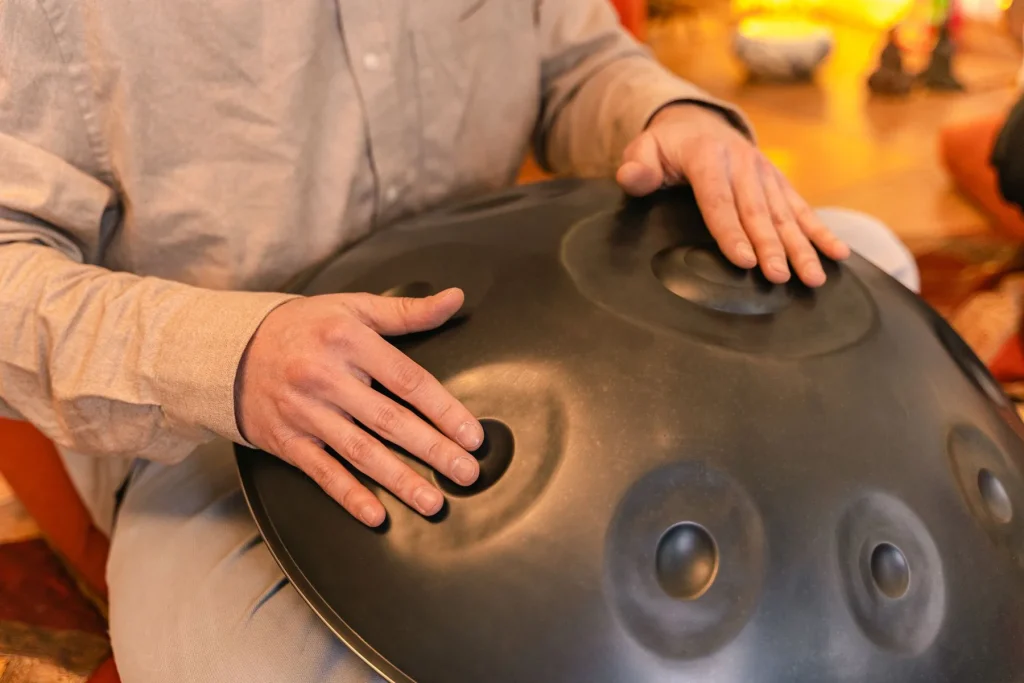
The handpan is a fascinating instrument that is attracting more and more music enthusiasts. For beginners, making the right choice from the outset is essential to fully enjoy this unique experience. This guide is designed to support you through the process and help you navigate the complex world of this instrument.
Several criteria should be considered when selecting a suitable handpan. Sound quality, musical scale, materials and budget are key factors. For example, a model with 8 or 9 notes is often recommended for beginners because it is easier to learn.
Historically, acquiring a quality instrument could be difficult, with waiting lists of up to 3 years. Today, more accessible options are available to new musicians. To learn more, read our complete guide, which covers all the technical and practical aspects.
Introduction to the handpan: a unique instrument for beginners
With its captivating tones, the handpan is an ideal choice for beginners. This instrument, invented by PANArt in 2001, consists of two metal shells. At the center is the Ding, surrounded by harmoniously arranged notes. The Gu, a resonance hole, completes this unique structure.
Its history goes back to the Hang®, the first model created by PANArt. Since then, it has evolved into a versatile musical instrument. Whether used for meditation, yoga or music therapy, it is suitable for many settings.
What is a handpan?
The handpan is a melodic percussion instrument. Its steel construction gives it a rich, deep sound. The notes arranged around the Ding allow for a wide variety of melodies. Its ergonomic design makes it easy to handle, even for beginners.
Why choose a handpan as your first instrument?
This handpan is particularly suitable for beginners. It requires no knowledge of music theory, making it intuitive to play. Its therapeutic applications, such as deep relaxation, also make it a versatile tool. According to ZenaPan, it provides a personalized experience for every musician.
- Easy to learn: no prior musical knowledge required.
- Versatile: suitable for meditation, yoga and much more.
- Unique sounds: soothing and captivating melodies.
Essential criteria for choosing your first handpan
When considering a handpan, sound quality and the number of notes are key factors to examine. These aspects directly affect the musical experience and ease of learning.
Sound quality: the first criterion to check
A handpan’s sound quality is assessed using several factors. Consistent sustain and good isolation between tone fields are essential. To evaluate them, listen carefully to the harmonics and check for the absence of crosstalk.
Using a professional tuner can also help verify tuning accuracy. According to Shellopan, a quality handpan should provide a wide dynamic range and good balance between notes.
Number of notes: which configuration should you choose?
The number of notes is another important criterion. A configuration of 9 to 10 notes is often recommended for beginners. It offers a good balance between simplicity and versatility.
Models with fewer than 8 notes may limit musical possibilities, while those with more than 12 can be difficult to master. At Metal Sounds, for example, there is a significant price difference between a 9-note model and a 15-note model.

| Number of notes | Advantages | Disadvantages |
|---|---|---|
| 8 to 9 notes | Easy to learn, affordable price | Limits complex melodies |
| 10 to 12 notes | Greater versatility | Higher price |
| More than 12 notes | Wide variety of sounds | Difficult for beginners to master |
Handpan scales: find the right one for you
Exploring handpan scales means discovering a unique world of sound. Each configuration has a distinct tonality that influences the emotion and resonance of your playing. Understanding these nuances is essential for beginners who want to make the right choice.
Major scales: joy and energy
Major scales are often associated with positive emotions. They convey joyful, dynamic energy that is ideal for bright compositions. The C major scale, for example, is popular for its balance and simplicity.
Minor scales: depth and introspection
Minor scales, such as D minor, have a deep, melancholy sound. They are perfect for moments of reflection or meditation. According to ZenaPan, 85% of beginners choose this scale for its emotional impact.
Eastern scales: escape and spirituality
Eastern scales such as Hijaz take listeners on a spiritual journey. Their unique structure creates a captivating atmosphere that is ideal for experimental compositions.
- Emotional analysis: each scale influences the state of mind of the player and listener.
- Practical advice: listen to examples on YouTube before choosing.
- Special case: chromatic scales are intended for experienced players.
Before finalizing your choice, take the time to try several scales. Listening carefully will help you find the one that best resonates with your expectations.
Handpan material: nitrided or stainless steel?
A handpan’s material directly influences its sound and durability. Two main options stand out: nitrided steel and stainless steel. Each has unique characteristics suited to specific needs.

Advantages of nitrided steel
Nitrided steel is valued for its short sustain, which is ideal for fast rhythms. This material offers excellent resistance to scratches and external influences, making it suitable for outdoor use. It also produces a clear, robust sound that is perfect for dynamic compositions.
In terms of maintenance, nitrided steel requires little care. However, it is sensitive to moisture, which can affect its durability in humid regions.
Advantages of stainless steel
Stainless steel, particularly grade 430 stainless steel, is known for its corrosion resistance. This material offers exceptional durability, even in challenging environments. Its versatile acoustic properties produce a broad range of tones suited to various musical styles.
According to ZenaPan, stainless steel is particularly recommended for beginners. It is durable and easy to maintain, making it a practical choice for new musicians.
- Technical comparison: nitrided steel has shorter sustain, while stainless steel provides longer resonance.
- Maintenance: stainless steel requires less maintenance than nitrided steel, especially in humid climates.
- Climate considerations: choose stainless steel if you live in a humid region to prevent corrosion.
Handpan prices: how much should you invest in a good instrument?
Investing in a handpan requires careful consideration of your budget and the instrument’s quality. As a handcrafted instrument, it represents a significant financial commitment. Understanding the factors that affect its price is essential to making an informed choice.

Average prices for a quality handpan
A quality handpan generally costs between €1,000 and €3,500. This price reflects the craftsmanship, materials and tuning precision involved. Labor accounts for approximately 70% of the cost, while materials account for 20%.
It is important to note that low-budget marketplace offers may conceal risks. These models are often lower in quality and may not provide the same sound experience.
New or used handpan: which should you choose?
Buying a new handpan ensures optimal quality and greater durability. However, a used instrument can be an appealing way to reduce costs. Before buying, check the instrument’s condition and tuning, as well as whether it has any scratches.
- Used buying guide: check the general condition, tuning and origin.
- Financing: some craftspeople offer options such as six interest-free installments.
- Scam warning: beware of fraudulent websites and offers that seem too good to be true.
In conclusion, the choice between a new and a used instrument depends on your priorities and budget. Take the time to compare your options and find the instrument that meets your expectations.
Tuning frequency: 432 Hz or 440 Hz?
Tuning frequency plays a key role in the musical experience. It influences not only the sound but also the emotion and harmony of your playing. Two main options stand out: 432 Hz and 440 Hz. Each offers unique characteristics suited to specific needs.

Differences between the two frequencies
432 Hz is often described as being in harmony with the Earth’s natural vibrations. Some studies suggest that this frequency may have soothing and therapeutic benefits. It is particularly popular for meditation and music therapy.
By contrast, 440 Hz is the current standard for musical instruments. It is ideal for playing in a group because it ensures compatibility with other instruments. This frequency is more widespread and accounts for approximately 60% of sales.
Which frequency should you choose for your needs?
The choice depends on your musical project. If you want an introspective, meditative experience, 432 Hz is an excellent option. It offers deep, soothing resonance that is ideal for relaxation.
If you want to play in a group or with other instruments, however, 440 Hz is more suitable. Its compatibility with other instruments makes it a practical choice for ensemble musicians.
- Practical advice: try both frequencies to determine which one best resonates with your expectations.
- Compatibility: 432 Hz can be difficult to tune with other instruments.
- Statistics: 440 Hz remains the most widely used frequency in the world of music.
To learn more about the advantages of each frequency, read our detailed guide.
Handpan sustain: understanding resonance
A handpan’s resonance is a key element of its musicality. It defines how long the notes continue to vibrate after they are struck. This characteristic, called sustain, directly influences sound quality and the playing experience.
What is sustain?
Sustain is the length of time that notes resonate. It is measured in seconds, from the moment a note is struck until the sound fades away. Medium to long sustain is often recommended for beginners because it allows for greater immersion in the melody.
Technically, sustain depends on several factors, including the thickness of the steel and tuning accuracy. Sustain that is too short can limit expressiveness, while sustain that is too long can make control difficult.
How do you choose the ideal sustain as a beginner?
Medium to long sustain is ideal for beginners. It offers a balance between expressiveness and ease of control. Here are a few tips for making the right choice:
- Comparative listening: compare audio demonstrations to identify the sustain that suits you.
- Musical style: long sustain is suitable for meditation, while short sustain works better for percussive rhythms.
- Maintenance: protect your instrument from moisture to preserve the quality of its sustain.
In summary, your choice of sustain depends on your preferences and playing style. Take the time to try different models and find the one that meets your expectations.
Handpan makers: how do you find a trustworthy craftsperson?
Finding a reliable handpan maker is crucial to ensuring the instrument’s quality. A good maker combines expertise and precision to create exceptional instruments. Here are a few tips for identifying a trustworthy craftsperson.
Recognized brands in France and Europe
Several brands stand out for their expertise and reputation. PANArt, a pioneer in the creation of the handpan, remains an essential reference. ZenaPan and Metal Sounds are also recognized for their quality and capacity for innovation. These makers offer instruments suited to musicians’ needs, whether they are beginners or experienced players.
Criteria for identifying a good maker
Several factors should be checked when choosing a trustworthy craftsperson:
- Experience: favor a maker with several years of practical experience.
- Quality-control tools: make sure the craftsperson uses precise methods for tuning and finishing.
- Customer reviews: read testimonials to assess user satisfaction.
ZenaPan’s manufacturing process is a good example: every stage is rigorously monitored to ensure a high-quality instrument.
| Criterion | Importance |
|---|---|
| Experience | A key factor in reliable craftsmanship |
| Quality-control tools | Ensure precision and sound quality |
| Customer reviews | Reflect satisfaction and reputation |
To learn more about the selection criteria, read our complete guide.
Essential accessories for your handpan
Accessories play a key role in optimizing your experience with your instrument. They provide protection and improve playing comfort. Here is a guide to choosing the right equipment for your needs.
Protective cases
A quality case is essential for protecting your handpan. Materials vary by model:
- Neoprene: lightweight and moisture-resistant.
- Leather: elegant and durable, but heavier.
- Polyester: affordable and easy to maintain.
The reinforced Evatek case for Spacedrum is an excellent choice for optimal protection. For tight budgets, do-it-yourself solutions can provide basic protection.
Stands and supports for comfortable playing
An ergonomic stand improves your posture and makes playing easier. Metal Sounds stands are designed to provide maximum stability. They accommodate different positions, whether you are sitting or standing.
Here is a comparison of essential accessories:
| Accessory | Advantages | Disadvantages |
|---|---|---|
| Neoprene case | Lightweight and durable | High price |
| Ergonomic stand | Stability and comfort | Bulky |
| Anti-vibration gloves | Protect the hands | Require adjustment |
Finally, ZenaPan’s beginner pack includes a case, stand and learning method. It is a complete solution for new musicians.
Maintaining your handpan: how can you preserve it?
Taking care of your instrument is essential to maintaining its sound quality. Regular maintenance extends its lifespan and preserves its performance. Here are the essential steps and products for protecting your handpan.
Essential steps for protecting your instrument
After each use, wipe your handpan with a soft cloth to remove fingerprints and dust. Avoid abrasive products that could damage the steel surface. For deep cleaning, use a polish specifically intended for nitrided steel, which preserves the instrument’s shine and quality.
Store your handpan in a dry place, protected from temperature fluctuations. A suitable protective case is recommended to prevent impacts and scratches.
Recommended maintenance products
Here is a list of essential products for handpan maintenance:
- Nitrided-steel polish: protects and conditions the instrument’s surface.
- Microfiber cloth: ideal for gentle, effective cleaning.
- Protective case: provides optimal protection during transport and storage.
Avoid corrosive agents such as bleach or solvents, which could damage the steel.
Finally, remember to check your handpan’s tuning regularly. Annual retuning is recommended to maintain its sound quality. If you travel frequently with your instrument, specialized insurance may be useful to cover potential damage.
Mistakes to avoid when buying a handpan
Buying a handpan can be a rewarding experience, but certain mistakes should be avoided to ensure the quality of your instrument. Offers that seem too good to be true and online scams are common traps that can jeopardize your investment.
The pitfalls of offers that seem too good to be true
Here are some warning signs of a counterfeit:
- An abnormally low price compared with the market.
- No SIRET business-registration number or legal contact details.
- Vague descriptions or a lack of technical details.
How can you identify online scams?
To avoid scams, always verify the seller’s legitimacy. Check the French Trade and Companies Register to confirm that the business exists. Favor secure payment methods such as PayPal, which offer protection in the event of a dispute.
Analyze testimonials from other buyers to identify recurring patterns. If a website appears suspicious, do not take any risks. A complaints procedure is available if a problem occurs, but prevention remains the best strategy.
Resources for expanding your knowledge of the handpan
Discovering the handpan also involves exploring the resources devoted to it. Whether through events or online platforms, these tools will help enrich your musical experience.
Festivals and workshops where you can try handpans
Festivals devoted to the handpan are unique opportunities to discover the instrument. Major events include HangOut USA and Pantheon Steel. These gatherings allow visitors to try different models and meet fellow enthusiasts.
In France, the annual calendar includes introductory workshops. These sessions, often led by experts, offer practical instruction. Costs generally range from €50 to €150, depending on their length and program.
Online platforms for listening to and comparing scales
Online platforms are valuable resources for in-depth listening. Specialized YouTube channels offer demonstrations and tutorials. These videos allow you to compare scales and choose the one that suits you.
Online communities, such as active Facebook groups, are also useful. They provide practical advice and encourage discussion between musicians. Some partnerships, such as those offered by ZenaPan, include member discounts.
Finally, there is an essential bibliography for expanding your knowledge. Books and methods approved by experts can guide your learning. These resources perfectly complement events and online platforms.
Conclusion: make the right choice for your first handpan
To get off to a good start with this instrument, it is essential to understand the key points. Here is a summary of the 7 factors to remember: sound quality, number of notes, musical scale, material, price, tuning frequency and sustain. These criteria will help you make the right choice for your first handpan.
Always prioritize quality over price. A well-made instrument ensures a better musical experience and greater durability. To expand your knowledge, read our supplementary guides available online.
Take advantage of our special offer: a free personalized assessment to help you select the model suited to your needs. Feel free to contact us through our form with any questions or to begin your musical journey today.