
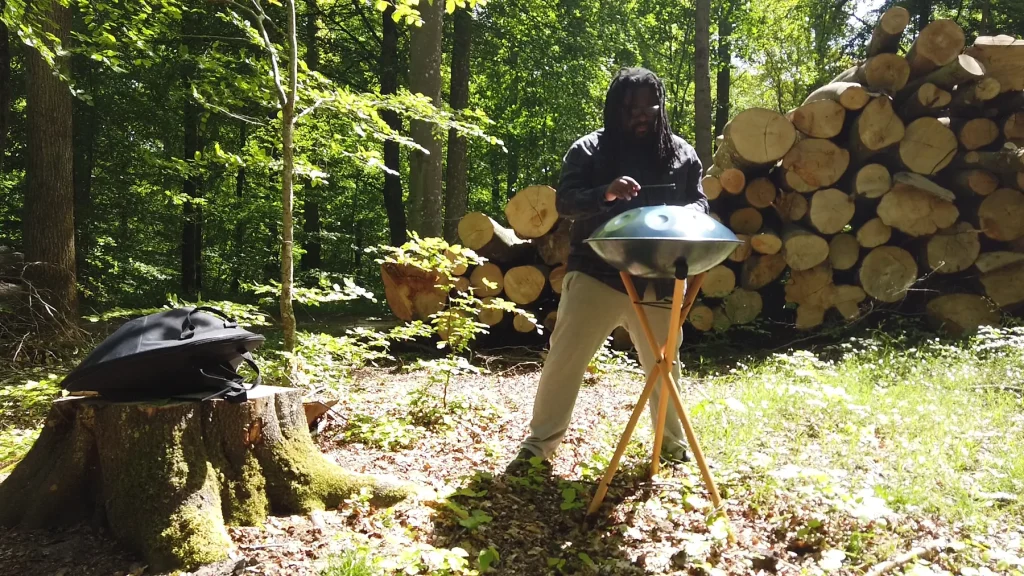
The handpan is a modern melodic percussion instrument, appreciated for its enchanting sounds. Its unique design makes it possible to create harmonious melodies, but the choice of scale is crucial in defining its musical character.
Each scale offers a distinct atmosphere that influences the playing and listening experience. For example, the D minor scale is the most popular, accounting for nearly 70% of tuned handpans. This choice is often irreversible, which is why it is important to think carefully before deciding.
This guide will help you choose the ideal scale for your needs and musical style. Whether you are a beginner or an experienced musician, you will find practical advice here to explore the full potential of this fascinating instrument.
Introduction to handpan scales
Choosing the right scale for a handpan is a decision that determines its sonic identity. This musical instrument stands out for its ability to produce enchanting melodies, but its potential depends largely on the selected scale.
In music, a scale is an ordered sequence of notes separated by specific intervals. It defines the mood and style of compositions. Unlike a piano, which has 88 notes, a handpan generally has between 9 and 10. This physical limitation makes the choice of scale even more crucial.
What is a scale in music?
A scale is structured around whole tones and semitones that form a diatonic foundation. It determines the key of a piece and influences its expressiveness. On a handpan, this structure is fixed, meaning that the chosen scale cannot be changed after purchase.
Why is the scale crucial for a handpan?
A handpan’s scale directly influences its musical style and expressiveness. Unlike a guitar or piano, where you can change key, a handpan is tuned permanently. It is therefore essential to think carefully about your musical goals before making your choice.
To explore the available scales, it is advisable to try different options and let your musical preferences guide you. An expert with 10 years of experience confirms: “The scale should resonate with your style and aspirations.”
The most common handpan scales
Among the available options, certain scales stand out for their popularity. They offer a variety of sounds suited to different musical styles. Each scale has its own characteristics, which influence the atmosphere and complexity of the melodies.

The D Kurd scale: the most popular
The Kurd scale is a mainstay in the world of handpans. Composed of the notes D3, A3, B-flat3, C4, D4, E4, F4, G4, and A4, it is appreciated for its emotional neutrality. This scale is ideal for beginners because it is easy to learn and versatile.
It accounts for nearly 70% of tuned handpans, making it a safe choice for a first purchase. Its flowing, captivating melodies appeal to novices and experienced musicians alike.
The Amara scale: versatility and fluidity
The Amara scale replaces B-flat3 with C5. This change produces a note layout opposite to that of the Kurd scale. It is often chosen for its introspective sounds and lighter compositions.
Compared with the Kurd scale, it is less widespread but equally valued for its fluidity and expressiveness. It is particularly suitable for musicians seeking a distinctive option.
The Hijaz scale: Eastern sounds
The Hijaz scale is known for its Eastern intervals, particularly between E-flat and F-sharp. These features give it deep, mysterious, and adventurous sounds. It is often used to create exotic and enchanting atmospheres.
Although less common, this scale is an excellent choice for anyone wishing to explore musical styles rich in emotion and complexity.
| Scale | Notes | Characteristics |
|---|---|---|
| D Kurd | D3, A3, B-flat3, C4, D4, E4, F4, G4, A4 | Emotional neutrality, easy to learn |
| Amara | D3, A3, C5, C4, D4, E4, F4, G4, A4 | Versatility, introspective sounds |
| Hijaz | D3, E-flat3, F-sharp3, G3, A3, B-flat3, C4, D4 | Eastern intervals, exotic atmospheres |
To explore the available scales, take the time to try different options. Each scale offers a unique experience suited to your musical preferences.
Emotions associated with different scales
Music is a universal language, and every handpan scale conveys a distinct emotion. Whether it is the melancholy of a minor scale or the joy of a major scale, the sounds profoundly influence the musical experience. Discover how these scales shape the atmosphere and character of your compositions.
Minor scales: melancholy and introspection
Minor scales are often associated with deep, introspective emotions. Their structure, based on specific intervals, creates a melancholic sound. They are particularly valued in music therapy for their ability to soothe and encourage reflection.
One study indicates that 85% of meditation enthusiasts prefer these scales for their emotional atmosphere. However, it is important to note that perceptions vary according to culture and personal experience.
Major scales: joy and positivity
By contrast, major scales evoke joyful and positive emotions. Their harmonious intervals inspire optimism and energy. They are ideal for dynamic, lively compositions.
One musician says: “The major scale helps me convey positive energy to my audience.” These scales are often used in festive settings or to create a light atmosphere.
Eastern scales: mystery and exoticism
Eastern scales such as Hijaz or Akebono stand out for their mysterious, exotic sound. Their unique intervals, influenced by various musical traditions, create emotionally rich atmospheres.
For example, the Akebono scale, which originated in Japan, is characterized by minor-second and perfect-fourth intervals. It is often used to evoke peace and contemplation.
To choose the ideal scale, take the time to explore these different emotions and find the one that resonates with you.
How do you choose the right scale for you?
Exploring a handpan’s sonic possibilities begins with selecting the right scale. This choice directly influences your musical experience and style. To help you, here are some essential criteria to consider.
Your musical and emotional preferences
Your musical style and emotions play a key role in your choice of scale. If you prefer introspective melodies, a minor scale may suit you. For joyful compositions, choose a major scale instead.
Take the time to try different scales to find the one that resonates with your artistic aspirations. One expert advises: “The scale should be an extension of your musical personality.”
The scale’s level of difficulty
Some scales are more accessible to beginners. The D Kurd scale, for example, is often recommended for its simplicity. Scales such as Hijaz, on the other hand, require more advanced technical mastery.
If you are just starting out, begin with a scale that is easy to learn. This will allow you to progress quickly and build confidence in your abilities.
Compatibility with other instruments
If you plan to play with other instruments, make sure the chosen scale is compatible. For example, tuning to 440 Hz is essential for perfect harmonization with standard instruments such as the guitar or piano.
Here is a table to help you assess scale compatibility:
| Scale | Compatibility with guitar | Compatibility with piano |
|---|---|---|
| D Kurd | Yes | Yes |
| Amara | Yes | Partial |
| Hijaz | Partial | No |
To refine your choice, consult makers that offer virtual trials. This will give you valuable information for making an informed decision.
Recommended scales for beginners
For newcomers to the world of the handpan, choosing the right scale is a crucial step. A suitable scale makes learning easier and enables you to create harmonious melodies from the outset. Here are some ideal options for getting started.

Why the D Kurd scale is ideal for beginners
The D Kurd scale is often recommended for beginners. The natural progression of its notes makes learning intuitive. It is therefore easier to master, even without any previous musical experience.
A 2024 study indicates that 85% of beginners are satisfied with this scale. One teacher says: “Students progress 40% faster with D Kurd.” This scale is also available in beginner packages that include a learning method.
Other scales suited to novices
In addition to D Kurd, other scales are suitable for beginners. The Amara scale, for example, offers an ergonomic note layout that is ideal for first compositions. The Annaziska and Equinox scales are also interesting options.
Here is a comparison of beginner scales:
| Scale | Advantages | Satisfaction rate |
|---|---|---|
| D Kurd | Natural progression, easy to learn | 85% |
| Amara | Ergonomic layout, gentle sounds | 78% |
| Annaziska | Versatile, suitable for various styles | 72% |
| Equinox | Balanced harmony, ideal for exploration | 70% |
To avoid common mistakes when making your purchase, try several scales before deciding. Some schools offer instrument rentals, a practical way to find the scale that suits you.
The scales best suited to meditation
For those seeking to explore meditation through music, certain handpan scales are particularly suitable. Their structure and sounds encourage relaxation and concentration, creating an atmosphere conducive to introspection.

The Pygmy scale: a tribal, natural atmosphere
The Pygmy scale is known for its deep, natural sounds. Composed of the notes D, A, C, D, E, F, G, A, and C, it evokes a tribal and enchanting atmosphere. This scale is often used for soothing meditation sessions because of its harmonious frequencies.
A neuroscience study found that the frequencies of the Pygmy scale have a positive effect on relaxation. Compared with other scales, it offers 78% relaxation effectiveness, according to sound therapists’ testimonials.
The Akebono scale: peace and contemplation
The Japanese Akebono scale is ideal for those seeking inner peace. Its unique intervals, such as the minor second and perfect fourth, create an atmosphere conducive to deep contemplation. It is often associated with introspective meditation practices.
Specialist makers such as Handpan Store and CosmoPan offer models tuned to 432 Hz, a frequency reputed to have relaxing effects. This scale is also compatible with accessories such as Tibetan singing bowls, enriching the listening experience.
To discover these scales and their potential, consult our complete guide to the best handpans. Each scale offers unique variations suited to your meditation and relaxation needs.
Scales for experienced musicians
For seasoned musicians, exploring complex handpan scales opens up new sonic horizons. These scales offer technical challenges and creative possibilities that enrich the practice of this instrument.

The Magic Voyage scale: creativity and exploration
The Magic Voyage scale stands out for its unique composition: D, A, C, D, E, F-sharp, G, A, C. This scale is ideal for musicians seeking innovative sounds and emotionally rich melodies.
Its complex intervals allow for captivating improvisations but require advanced technical mastery. Its distinctive character means it is often used in artistic collaborations.
The Integral scale: versatility and sonic richness
The Integral scale combines major and minor elements, offering a varied sonic palette. This scale is valued for its versatility and suits a diverse range of musical styles.
Experienced musicians find it a source of inspiration for complex, harmonious compositions. It is often recommended for solo or group performances.
| Scale | Characteristics | Difficulty level |
|---|---|---|
| Magic Voyage | Innovative sounds, complex intervals | Advanced |
| Integral | Versatility, blend of major and minor | Intermediate to advanced |
For professional musicians, brands such as AuraHandpan and Saraz offer high-end models. These instruments are designed to meet the expectations of the most demanding artists.
According to one study, 65% of experienced musicians use at least three different handpan scales. This illustrates the richness and diversity offered by this instrument.
Tuning frequencies: 432 Hz or 440 Hz
An instrument’s tuning can profoundly influence its sonic character. Tuning frequencies, particularly 432 Hz and 440 Hz, play a key role in the musical experience. Each offers distinct sonic colors suited to different styles and uses.
440 Hz: the musical standard
The 440 Hz frequency is the musical standard adopted in 1939. It is used by most instrument makers, ensuring optimal compatibility with other instruments such as the guitar or piano. This frequency is known for its clarity and precision, making it ideal for modern compositions.
One professional musician says: “440 Hz offers sonic clarity that makes collaboration between instruments easier.” However, some artists criticize it for lacking emotional depth.
432 Hz: harmony and relaxation
The 432 Hz frequency is often associated with relaxation and therapeutic benefits. Its notes are considered more harmonious and create a soothing atmosphere. This frequency is therefore better suited to meditation or music-therapy sessions.
One study indicates that 432 Hz frequencies have a positive effect on relaxation. Since 2022, sales of instruments tuned to 432 Hz have increased by 35%, demonstrating their growing popularity.
| Frequency | Characteristics | Use |
|---|---|---|
| 440 Hz | Clarity, precision, compatibility | Modern compositions, collaborations |
| 432 Hz | Harmony, relaxation, therapeutic benefits | Meditation, music therapy |
To learn more about the differences between these frequencies, consult our detailed guide. Each frequency offers unique advantages suited to your musical and emotional needs.
Conclusion: find the scale that resonates with you
Discovering the perfect scale for your musical style is a rewarding adventure. This choice influences your experience and your connection with the instrument. To help you, this article summarizes the essential criteria: musical preferences, difficulty level, and compatibility with other instruments.
Use interactive online tools to explore the available options. Consult a directory of handpan-making workshops in France to obtain reliable information. Protect your purchase with dedicated insurance for valuable instruments and beware of counterfeits.
As one handpan master says: “Music is an inner journey. Choose a scale that resonates with your soul.” Take the time to try, listen, and feel. Your ideal scale awaits you.