
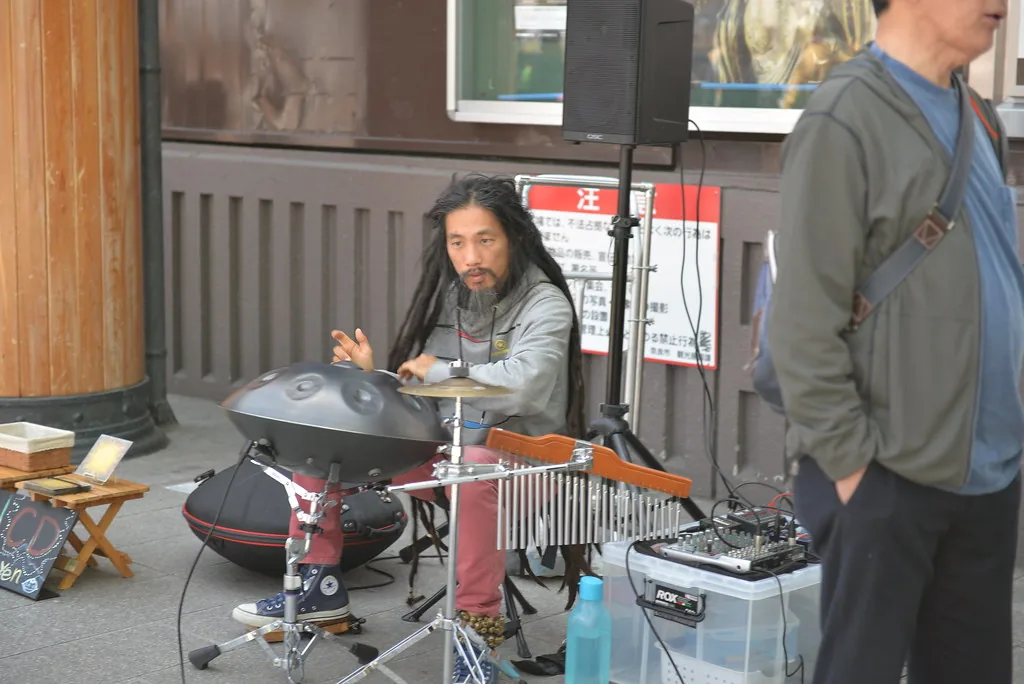
In the world of musical instruments, certain objects are often confused. Among them, two captivating percussion instruments stand out for their unique sound and rich history. Although similar in appearance, these creations possess distinct characteristics worth exploring.
Over the years, these instruments have evolved through technical innovations and legal challenges. Their development has been influenced by passionate craftspeople whose contributions have shaped their current identity. To better understand their differences, it is essential to examine their history and construction.
This article will guide you through the historical, physical, and legal aspects that define these two percussion instruments. Drawing on more than 10 years of expertise in the field, we offer an in-depth analysis to help you identify them clearly. Immerse yourself in this fascinating world and discover the nuances that make them unique.
To learn more about their history, read our detailed article here.
Introduction to the Handpan and Hang Drum
Among modern percussion instruments, two metallic instruments captivate listeners with their unique sound. Played with bare hands, these creations are distinguished by their rounded shape and mesmerizing tone. Although they share certain similarities, their origins and characteristics differ.
It is essential to clarify the terms used for these percussion instruments. “Hang Drum” refers to a trademark registered by PANArt, a Swiss company. By contrast, “Handpan” has become the generic term for similar instruments created by other manufacturers.
Production of these instruments varies considerably. PANArt produces around 400 Hang instruments annually, while various craftspeople around the world make thousands of Handpans every year.
Since the 2000s, the way these percussion instruments are understood and described has evolved. This semantic evolution reflects their growing popularity and influence on contemporary music.
To learn more about their history, read our detailed article here.
| Characteristic | Hang Drum | Handpan |
|---|---|---|
| Origin | Switzerland (PANArt) | Generic term |
| Annual production | Approximately 400 units | Thousands of units |
| Shape | Rounded, metallic | Rounded, metallic |
Origins and History of the Hang Drum
In 2000, Felix Rohner and Sabina Schärer created a revolutionary instrument. Their Swiss company, PANArt Hangbau AG, made its mark on the history of metal percussion. Inspired by the steelpan and the Indian ghatam, the Hang is the product of a bold hybridization.
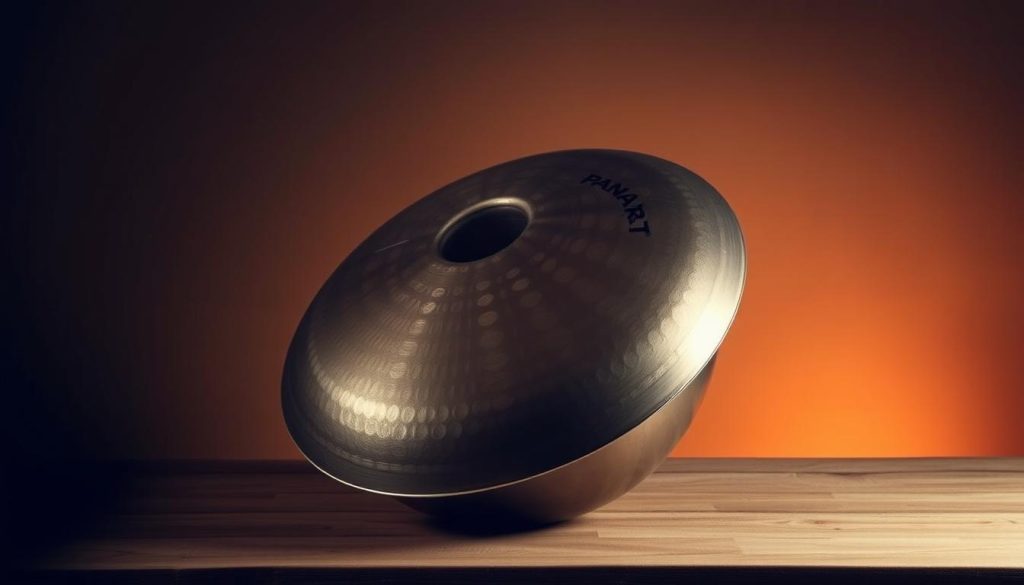
The artisanal method used by PANArt Hangbau is unique. The company developed a special steel called Pang steel, patented for its exceptional sound quality. Combined with meticulous craftsmanship, this material gives the Hang its mesmerizing tone.
The sales process was equally unusual. Prospective buyers had to write a handwritten letter explaining why they wanted to own the instrument. Once selected, they had to travel to Switzerland to acquire it. This exclusive approach contributed to its mysterious aura.
In 2005, the Hang achieved unexpected success thanks to videos on YouTube. Its popularity soared, creating a paradox: worldwide demand confronted a deliberately limited production. This strategy helped preserve the instrument’s authenticity.
From 2001 to 2013, the Hang evolved through several generations, each bringing technical improvements. To learn more about the history of the Hang, read our detailed article.
Origins and History of the Handpan
In response to the scarcity of the Hang, a new generation of instruments emerged. The Handpan appeared as an accessible alternative that met growing worldwide demand. Inspired by the Hang, this metal percussion instrument is the product of technical innovation and artisanal expertise.
The Emergence of the Handpan as an Alternative
In 2007, makers such as Pantheon Steel, Bellart, and Spacedrum began producing similar instruments. They used nitrided steel or Ember steel as alternatives to the patented Pang steel. This adaptation made it possible to create unique sounds while meeting technical constraints.
Several factors encouraged this emergence:
- The scarcity of the Hang and its limited production.
- Exponential demand from musicians and enthusiasts.
- Innovations in tuning methods that made the Handpan more accessible.
Key makers such as Yatao and Metal Sounds also helped diversify the products available on the market.
The Handpan’s Growing Popularity
The Handpan quickly gained popularity, with the market estimated at 15,000 units annually in 2023. Social media played a major role in making it more widely accessible, allowing musicians to share their performances and reach a global audience.
This percussion instrument continues to evolve, driven by a passionate community and innovative other makers. Its success demonstrates its influence on contemporary music and its artistic potential.
Physical Differences Between the Handpan and Hang Drum
When these two metal percussion instruments are examined, their physical differences are immediately apparent. Although similar in appearance, their shape, materials, and construction reveal distinct characteristics.
Shape and Structure
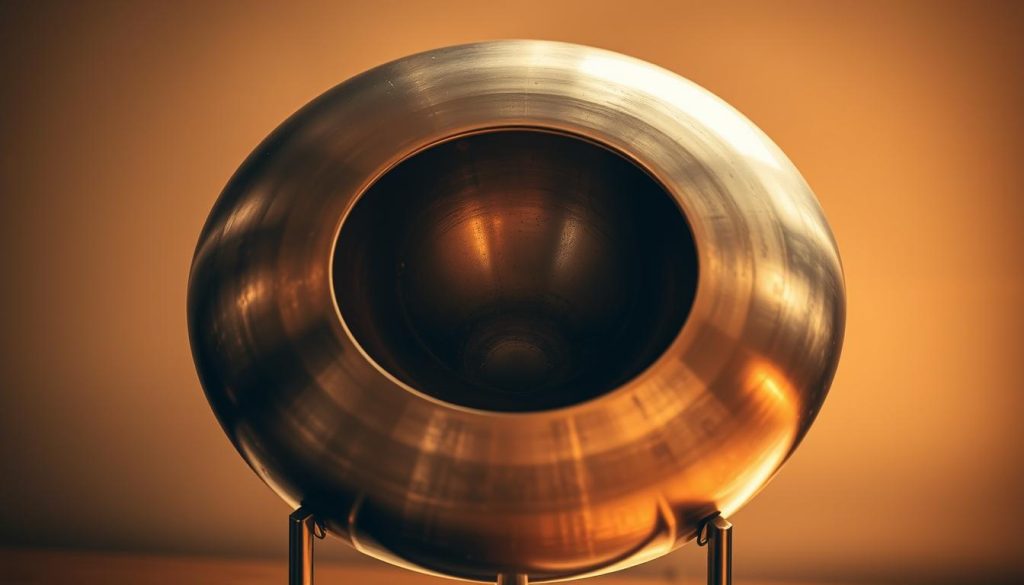
The Hang is distinguished by its precise lenticular shape, with a standard height of 24 cm. Its central dome is designed to optimize resonance and sound projection. The Handpan, by contrast, varies in curvature, with an average difference of plus or minus 3 cm.
Dimensions also play a key role. The Hang has a slightly larger diameter and a thicker shell, which affect its sustain and acoustic stability. The Handpan is often lighter, with an average weight of 4.2 kg compared with 5 kg for the Hang.
Materials Used
Material composition is another point of divergence. The Hang uses a proprietary alloy called Pang steel, patented by PANArt. This material gives it a unique sound and excellent resistance to oxidation.
The Handpan, by contrast, is generally made from standardized nitrided steel. Although less exclusive, this material offers good durability and a variety of timbres. The heat treatment also differs, affecting longevity and sound quality.
| Characteristic | Hang | Handpan |
|---|---|---|
| Shape | Precise lenticular shape | Variations in curvature |
| Height | 24 cm | 21 to 27 cm |
| Material | Pang steel | Nitrided steel |
| Weight | 5 kg | 4.2 kg |
Legal Issues Between the Handpan and Hang Drum
The legal issues surrounding these instruments have shaped their history. Intellectual-property protection and litigation have influenced their development and commercialization.
Registration of the Hang Trademark
PANArt, the Swiss company behind the Hang, registered a trademark to protect its invention. This registration preserved the exclusivity of its design and manufacturing method. However, it also limited production and created unmet demand.

Lawsuits Against Handpan Makers
In 2020, PANArt brought legal proceedings against German makers accused of copying the Hang’s design. These disputes led to the closure of several workshops in Europe. The Bern court’s decision in July 2024 recognized the Hang as a work of art, strengthening its legal protection.
The Creation of Handpan Community United (HCU)
In response to these issues, the community of craftspeople created HCU. This initiative raised €200,000 through crowdfunding. Its goal was to establish standards for Handpans and promote legal harmonization within the EU.
These legal developments highlight the importance of protecting copyright in the field of musical instruments. They continue to shape the future of these unique percussion instruments.
Other Names for the Handpan
Since its appearance, this instrument has been known by many terms, each with a unique history. These names reflect its adaptation to different cultures and its evolution over time.
Pantam, Spacedrum, and Other Names
The term “Pantam” was coined in 2004 by Ziv Yehezkel. It combines “pan” (steelpan) and “tam” (ghatam), emphasizing the instrument’s hybrid origins. This name is used mainly in Israel and certain Middle Eastern countries.
“Spacedrum” is a trademark registered by Metal Sounds, a French company. This name evokes the instrument’s ethereal, mesmerizing sound. It is widely recognized in Europe, particularly in France.
Other names, such as “UFO Drum,” refer to the instrument’s unusual shape, which is often compared to a UFO. These terms appear in online product descriptions and reflect its unique appearance.
The Evolution of the Terms Used
Mapping these names reveals regional trends. In Northern Europe, “Handpan” is the most common term, while in the United States, “Hang” remains associated with PANArt. This linguistic diversity reflects the instrument’s global influence.
Google Trends searches show that the term “Handpan” grew in popularity between 2010 and 2023. This semantic evolution reflects its adoption by an international community of musicians and enthusiasts.
To learn more about the other names and their history, read our detailed article here.
Conclusion
The differences between these two instruments lie in their history, construction, and sound. The first, created in 2000, is distinguished by its proprietary alloy, while the second, which appeared later, offers a variety of materials and tones. These distinctions shape their musical life and use.
In the future, technical developments may further accentuate these acoustic differences. Makers are constantly innovating, thereby enriching musicians’ experiences. When choosing an instrument, prioritize certified models as a guarantee of quality and durability.
To deepen your knowledge, consult our maintenance guides. Finally, do not hesitate to try these instruments in a store to experience their unique sound. You will then be able to make a more informed choice that is better suited to your needs.