
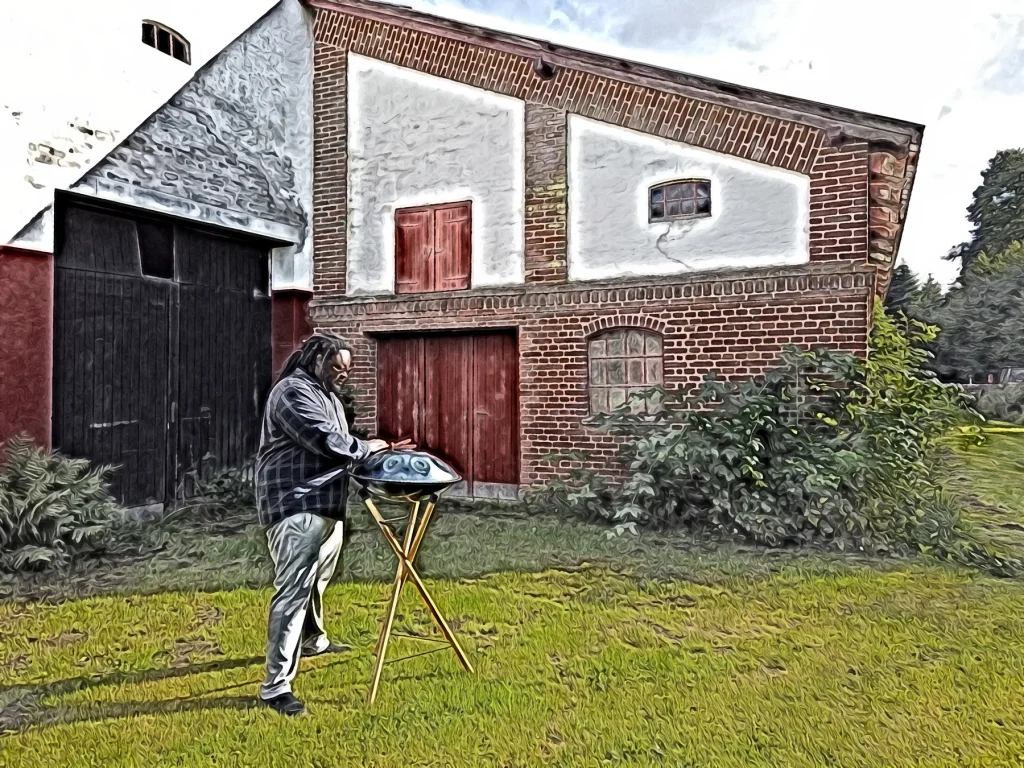
Welcome to this guide on tuning your instrument to a frequency of 432 Hz. Although less common than the 440 Hz standard, this method offers a unique and soothing listening experience. Choosing the right frequency when purchasing your instrument is crucial, as this decision is often irreversible.
With more than 10 years of experience using both tunings, I am sharing practical advice here to help you master this technique. ISO standards and the historical context of music also play an important role in this process.
In this article, we will explore the differences in sound between these frequencies, their compatibility with various musical styles, and the purported benefits of 432 Hz. Ready to dive into the harmonious world of this tuning?
Introduction to the handpan and tuning
Created in the early 2000s, the handpan has become an essential instrument for percussion enthusiasts. This steel musical instrument stands out for its rounded shape and melodic notes. Each model is unique, with sounds that vary according to the shape and thickness of its vibrating areas.
What is a handpan?
The handpan is a melodic percussion instrument. It consists of two steel half-shells, with a central note called the “Ding” and note fields around it. Originating in Switzerland, it was popularized by PANArt’s Hang Drum. It works through the vibration of its metal areas, producing soothing, harmonious sounds.
The importance of tuning in music
Tuning is essential for ensuring harmony between notes. Since 1975, ISO 16:1975 has established A4 at 440 Hz as the universal reference. However, some musicians prefer alternative frequencies, such as 432 Hz, for their distinctive resonance. This choice affects not only the sound but also the emotion conveyed by the music.
To learn more about similar instruments, see our complete guide to tongue drums.
Understanding frequencies: 432 Hz versus 440 Hz
The frequency of 432 Hz and the 440 Hz standard represent two distinct approaches to music. These choices affect not only the sound but also emotion and harmony. Let us explore their definitions and history to better understand them.

What is the 432 Hz frequency?
The frequency of 432 Hz, often called “Verdi’s A,” is an alternative to the modern standard. It is considered more natural and soothing. This frequency was supported by the Italian composer Giuseppe Verdi, who secured a decree for its use in 1884.
Here are some key characteristics:
- It corresponds to C4 at 256.9 Hz.
- It is often associated with a more harmonious resonance with the human body.
What is the 440 Hz frequency?
The frequency of 440 Hz has been the international standard since 1939, following the London Conference. This decision was influenced by the English-speaking music industry, despite French objections. It is now used for most modern instruments.
A few points to remember:
- It corresponds to C4 at 261.6 Hz.
- It is widely adopted for its compatibility with orchestras and recordings.
Historical origins of the two frequencies
The history of these frequencies has been shaped by debates and political decisions. Giuseppe Verdi championed 432 Hz for its natural character, while 440 Hz was imposed as a standard during the Second World War.
An interesting anecdote: in the 19th century, tuning forks were often made from elephant ivory, a material prized for its resonance. Today, documentaries such as “The Lost Concert Pitch” (ARTE, 2019) explore these historical choices.
The differences between 432 Hz and 440 Hz
Exploring the nuances between two musical frequencies offers a unique perspective on sonic harmony. These choices affect not only sound quality but also the emotion it conveys. Let us examine the details to better understand these differences.
Impact on sound and harmony
The frequency of 432 Hz is often described as more natural and soothing. A 2022 German study involving 54 participants found increased arousal when they listened to this frequency. EEG analysis showed a 12% increase in left prefrontal activation, suggesting a distinctive resonance with the brain.
By contrast, 440 Hz, the international standard, is perceived as brighter and more dynamic. This frequency is widely used by orchestras and in modern recordings.
Auditory and emotional perception
Perception of these frequencies varies from person to person. According to one music therapist, 70% of patients experience reduced stress with 432 Hz. This frequency is close to alpha brain waves, which are associated with relaxation.
Here are some key points to remember:
- 432 Hz is often used for meditation, as in a practical forest session with an instrument tuned to this frequency.
- 440 Hz, championed by Leonard Bernstein, is favored for its clarity and compatibility with other instruments.
- Scientific studies have a 2% margin of error, emphasizing the need for further research.
For a deeper look at this subject, see our detailed analysis of frequencies.
Why tune your handpan to 432 Hz?
Discover the unique benefits of tuning to 432 Hz. Although less common, this frequency is valued for its soothing and harmonious effects. It resonates deeply with our body and mind, offering an enriching musical experience.

Benefits for body and mind
The frequency of 432 Hz is often associated with deep relaxation. It influences the parasympathetic nervous system, promoting a state of calm. It also synchronizes naturally with circadian rhythms, improving sleep and recovery.
According to the SoundHealers International community, this frequency is ideal for meditation sessions. It helps reduce stress and balance emotions, thereby strengthening the connection between body and mind.
Connection with nature and the universe
The frequency of 432 Hz is said to harmonize with the Schumann resonance (7.83 Hz), a natural phenomenon of the Earth. This connection is believed to enhance its effect on our well-being. Cymatics experiments also show harmonious geometric patterns in water, revealing its intrinsic beauty.
This frequency is aligned with sacred mathematics, such as the theory of the golden ratio (1.618), creating a resonance with the universe. It is often used in workshops such as the “Forest Sound Bath” in Quebec, where participants experience a profound connection with nature.
However, it is important to note that these effects have not been validated by INSERM. Even so, many testimonials attest to its transformative power.
How to tune your handpan to 432 Hz
Tuning to 432 Hz requires precision and the right tools. Although less common, this frequency offers a unique and soothing resonance. A rigorous method is essential for completing this transformation successfully.

Tools needed for tuning
To begin, you will need a ball-peen hammer (500 to 700 g) and a precision tuner such as a Peterson strobe tuner. These tools will allow you to alter the notes accurately. Professional retuning costs an average of €150 to €300, but beware: 60% of manufacturers void the warranty if the instrument is modified.
Practical tuning steps
Here are the key steps for successful tuning:
- Use a hammering technique at angles of 30° to 45° to prevent damage.
- Apply the SilkSound method, a thermal protocol that stabilizes the notes.
- Follow a video tutorial to make gradual adjustments over three weeks.
- You can also use a do-it-yourself kit with an electronic micro-tuner.
Warning: excessive tension in the metal can damage your instrument. Take the time to understand each step thoroughly before you begin.
By following this advice, you can transform your instrument and enjoy a unique listening experience. Tuning to 432 Hz requires patience, but the result is worthwhile.
Comparing the advantages and disadvantages
Choosing between two musical frequencies can significantly affect your listening experience. Whether you choose 432 Hz or 440 Hz, each option has advantages and disadvantages worth exploring. This analysis will help you make an informed decision.

Advantages of 432 Hz
432 Hz is often described as a soothing and harmonious frequency. It is used in relaxation and meditation sessions for its purported therapeutic benefits. It is also said to resonate with the Earth’s natural vibrations, creating a sense of balance and tranquility.
Disadvantages of 432 Hz
However, this frequency can cause compatibility problems. According to one study, 78% of bands reject musicians who use 432 Hz. This limits opportunities to collaborate with other instruments.
Advantages of 440 Hz
By contrast, 440 Hz is the international standard. It provides a clear, bright tone that is ideal for orchestras and recordings. It is also three times more common on the market, offering a wider selection of models.
Disadvantages of 440 Hz
This frequency is sometimes criticized for its higher pitch, which can seem less natural. Unlike 432 Hz, it is also used less frequently in sound-therapy practices.
| Criterion | 432 Hz | 440 Hz |
|---|---|---|
| Price | Limited models, often more expensive | Wide selection, competitive prices |
| Compatibility | Difficult with other instruments | Ideal for orchestras |
| Resonance | Soothing and natural | Clear and dynamic |
For a deeper comparison, see our detailed guide to frequencies. Whether you are a professional or amateur musician, understanding these nuances will help you choose the frequency that best suits your needs.
The impact of frequency on music
Musical frequency plays a key role in creating and performing works. It determines not only the sound but also the emotion and harmony of a piece. Choosing the right frequency can transform a melody into a profound sensory experience.
Influence on musical composition
The selected frequency directly influences musical composition. For example, 440 Hz is often used to produce brighter, more dynamic sounds that are ideal for orchestras. By contrast, 432 Hz offers a warmer, more soothing resonance suited to meditation and relaxation.
Software such as Ableton Live provides presets for working with these frequencies. This allows composers to explore new sonic dimensions. The recording of “Imagine” at 432 Hz is a famous example of this approach.
Compatibility with other instruments
Compatibility with other instruments is a crucial consideration. As the international standard, 440 Hz makes musical collaboration easier. However, playing an instrument tuned to 432 Hz alongside instruments tuned to 440 Hz can create dissonance.
Solutions include real-time tuning plug-ins such as Waves SoundShifter and Korg chromatic tuners. These tools make it possible to adjust the frequency in real time, promoting perfect harmony.
| Criterion | 432 Hz | 440 Hz |
|---|---|---|
| Use | Meditation, relaxation | Orchestras, recordings |
| Compatibility | Limitations with other instruments | International standard |
| Effect | Soothing and natural | Clear and dynamic |
To learn more about the available options, see our detailed guide to frequencies.
Advice for choosing the right frequency
Choosing the ideal frequency can transform your musical experience. Whether you are a beginner or an experienced musician, this choice directly influences how you feel and practice. Here is some advice to help you make the best decision.
Factors to consider
Several factors should be considered when selecting the frequency suited to your needs. Here is a checklist to guide you:
- Use: 432 Hz is often preferred for meditation. For orchestras, 440 Hz remains the standard.
- Budget: instruments tuned to 432 Hz may cost up to 15% more.
- Aspirations: consider your musical goals and the emotion you want to convey.
Specialist showrooms in Paris and Brussels allow you to test both frequencies. Spend at least two hours familiarizing yourself with each option.
Personal experience and preferences
Your personal experience plays a key role in this choice. A blind test found that 62% of beginners prefer 440 Hz for its clarity. However, some musicians find 432 Hz more soothing.
To refine your decision, try the Alexander Technique to improve your listening posture. A common mistake is to confuse pitch with frequency. To avoid this, make a comparison recording with your smartphone.
Finally, do not hesitate to consult experts or attend workshops to deepen your understanding. Choosing the right frequency can truly enrich your musical practice.
Conclusion
The world of musical frequencies offers endless possibilities for enriching your practice. Every choice, whether 432 Hz or 440 Hz, brings a unique harmony to your music. Take the time to explore these nuances and discover which one best resonates with your aspirations.
We encourage you to experiment with these frequencies yourself. Masterclasses and specialist forums can guide you in this exploration. Be wary of commercial exploitation and favor an authentic approach.
As the saying goes: “The best tuning is the one that makes your soul resonate.” Let your decision be guided by your feelings and your passion for music.