
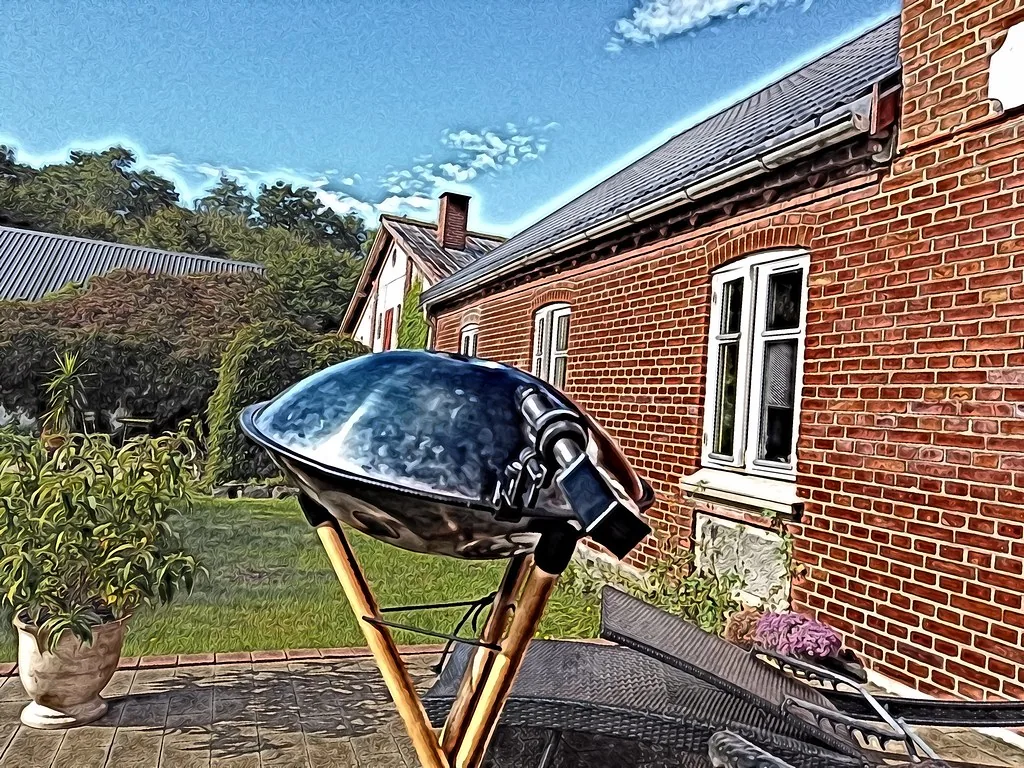
The handpan is a unique instrument, captivating listeners with its melodic tones and versatility. For musicians, performing on stage with this instrument requires meticulous preparation that combines technique and creativity.
Every performance is an opportunity to explore the creative process by harmonizing acoustic and artistic considerations. Artists such as NamAdiou have shown how to push the boundaries of this instrument, inspiring a growing community.
Whether at a festival or in an intimate venue, it is essential to understand technical details such as the optimal distance between the microphone and the instrument. This allows the handpan’s full sonic richness to be reproduced.
Introduction to the handpan in concert
On stage, this instrument reveals a captivating acoustic depth. Live performances showcase the unique nuances of this instrument, creating an immersive experience for the audience.
Why is this instrument unique live?
Compared with electronic instruments, this instrument offers minimal latency of 2 ms, enabling an immediate response. Its harmonic sounds create a rich melodic world that is difficult to reproduce with other instruments.
- Analysis of sound dynamics with the steel drum and ghatam.
- Managing harmonics in venues with complex acoustics.
The challenges of a live performance
Environmental conditions play a crucial role. An ideal temperature of 18 to 25°C and relative humidity of 40 to 60% are recommended to preserve the quality of the sound.
- Moisture-protection protocols.
- Solutions for preventing cumulative resonance in enclosed spaces.
- Use of IP67-certified transport cases.
These technical precautions ensure optimal performances, even in demanding environments.
Understanding handpan anatomy
The anatomy of this musical instrument is a blend of precision and craftsmanship. Every element contributes to its unique sound, making its design both technical and artistic. To master this instrument, it is essential to know its different parts and their roles.
The different parts of the instrument
This instrument consists of several key areas, each with a specific function. Its standard diameter is 53 cm, and its weight ranges from 5 to 8 kg. The 1.2 mm-thick nitrided steel provides optimal durability while influencing the quality of the notes.
| Part | Description | Impact on sound |
|---|---|---|
| Playing areas | Main surface on which the notes are played. | Determines clarity and resonance. |
| Dimples | Indentations shaped by hand hammering. | Influence sustain and harmonics. |
| Center | Central point of the instrument. | Creates stable fundamental frequencies. |
How each note influences the sound
The notes are at the heart of this instrument. Each playing area produces a specific frequency, as in the D Kurd scale tuned to 432 Hz. The tuning process, whether traditional or laser-assisted, plays a crucial role in pitch accuracy.
The depth of the dimples directly affects the sustain of the notes, while hand hammering enriches the harmonic spectrum. These techniques allow the instrument to be adapted to a variety of settings, such as modifying a Hijaz scale for a stage performance.
By understanding these elements, musicians can fully harness the instrument’s potential and create rich, captivating sounds.
Choosing the right handpan for your performance
Choosing the right instrument for a stage performance is a crucial step for any musician. With its unique tones, the handpan requires special attention to ensure it suits your style and environment.
Selection criteria
Several factors must be considered when selecting the right handpan. Durability is a key factor, with materials such as stainless steel offering better wear resistance than carbon steel.
Build quality is also essential. Brands such as Pantheon Steel and Ayasa are renowned for their precision and reliability. A mechanical stress-testing protocol can help you assess the instrument’s robustness.
Scales suited to a live set
Your choice of scale directly influences the atmosphere of your performance. For example, the D Minor scale is ideal for introspective melodies, while the Celestial scale offers brighter tones.
| Scale | Characteristics | Recommended use |
|---|---|---|
| D Minor | Deep, introspective melodies | Calm, meditative atmosphere |
| Celestial | Bright, joyful tones | Energetic, festive performances |
Adapting exotic scales to Western tuning systems can also enrich your repertoire. Techniques that hybridize a custom scale with electronics allow you to explore new sounds.
Finally, a case study such as Manu Delago’s setup for Björk shows how a well-chosen scale can turn a performance into an unforgettable experience.
Preparing your equipment for the concert
Preparing your equipment is essential to a successful performance. Every detail matters, from indispensable accessories to protection methods while traveling. Good organization ensures a smooth, professional experience.

Essential accessories
Certain accessories are crucial for optimizing your performance. A Stormcase, for example, protects your instrument from impacts and climate fluctuations. Hygrometers allow you to monitor humidity, a key factor in preserving the quality of the sound.
Other items, such as anti-vibration silicone gels, reduce sound interference. These technical solutions improve the instrument’s stability, even in environments with complex acoustics.
How to protect your instrument while traveling
Transport is a critical stage. Suspension systems designed for air travel minimize the risk of damage. IP67-certified cases offer optimal protection against moisture and impacts.
For tours, climate-controlled storage solutions maintain ideal conditions. An emergency protocol for onstage repairs is also recommended to handle unforeseen problems.
| Transport system | Advantages | Limitations |
|---|---|---|
| Air-transport suspension systems | Reduce vibration and impacts | High cost |
| IP67 cases | Protection against moisture | Additional weight |
| Climate-controlled storage | Stable conditions | Space requirements |
Finally, regular cleaning with products such as hexane extends the life of your instrument. These technical precautions allow you to focus on your performance without worrying about equipment.
Setting up your playing area
The acoustics of a playing area directly influence the quality of performances. A well-designed space maximizes acoustic depth and reproduces sounds accurately. Whether in a 100-person room or a 500-seat auditorium, every setup requires careful attention.
The importance of acoustics
Acoustics are a key element in creating an immersive experience. In poorly configured spaces, sounds can be lost or become unpleasant. Software such as Room EQ Wizard can analyze and correct acoustic problems.
- Positioning techniques based on the type of stage, whether in a theater or outdoors.
- Use of movable anodized-aluminum reflectors to redirect sound.
- Acoustic correction methods using variable absorption.
How to optimize resonance
Resonance is another crucial element. In overly reverberant spaces, sounds can overlap and create dissonance. Solutions such as adding absorptive panels or using acoustic enclosures help control this resonance.
| Solution | Advantages | Limitations |
|---|---|---|
| Absorptive panels | Reduce echoes | Space requirements |
| Acoustic enclosures | Precise resonance control | High cost |
| Movable reflectors | Direct sound | Require sufficient space |
A case study shows how acoustic optimization for a simultaneous live recording produced exceptional sound quality. These techniques are essential for successful performances, regardless of the space.
Basic techniques for playing live
Mastering basic techniques is essential for a successful performance. These methods maximize precision and fluidity while reducing muscle fatigue. Good preparation ensures a smooth, professional stage experience.
Posture and positioning
Correct posture is the foundation of an optimal performance. Ergonomic diagrams validated by physiotherapists show how to position the instrument to avoid muscle tension. A neutral position, with relaxed shoulders and a straight back, is recommended.
Pressure sensors can be used to analyze and adjust posture in real time. These techniques improve not only comfort but also movement accuracy.
Essential striking techniques
The optimal striking force is between 0.5 and 1.2 N. This range ensures clear resonance without damaging the instrument. The Hang Massive method, for example, teaches smooth transitions between rhythms.
- Dexterity exercises with an electronic metronome to improve coordination.
- Adapting traditional tabla techniques to enrich rhythmic patterns.
- A specific muscle warm-up protocol to prepare the hands and arms.
These techniques help develop progressive mastery, which is essential for delivering captivating performances.
Managing resonance during the performance
Managing resonance is crucial for a smooth, harmonious performance. Poorly controlled sounds can alter acoustic depth and detract from the overall experience. To prevent this, several techniques and elements must be considered.
How to control vibrations
Excessive vibrations can create sound interference. One effective technique is to use absorptive materials, such as chamois leather, to dampen unwanted resonance. These materials act as dampers and reduce parasitic vibrations.
- Mechanical-coupling isolation methods to stabilize the instrument.
- Use of real-time high-pass filters to eliminate problematic low frequencies.
- Mechanical solutions to minimize parasitic modes.
Techniques for avoiding dissonance
Dissonance often occurs in environments with complex acoustics. To avoid it, it is essential to identify problematic frequencies, generally between 180 and 250 Hz. A spectral-balancing process can correct these anomalies.
- Practical example: resolving feedback at 315 Hz with suitable filters.
- Procedures for adjusting sound-reinforcement systems to optimize the reproduction of sound.
- Use of acoustic panels to absorb cumulative resonance.
By mastering these techniques, you can ensure an acoustically balanced and captivating performance.
Integrating advanced sound effects
Exploring advanced sound effects can transform a performance into an immersive experience. These elements allow you to add complex sonic layers and enrich your musical world. Whether you use pedalboards or gesture controllers, each tool offers a unique interface for unleashing your creativity.
Compatible electronic effects
Pedalboards such as the Strymon Timeline and BigSky are popular pieces of equipment because of their versatility. They can create convolution reverbs with precise parameters suited to each performance style. Integrating cascaded loopers such as the RC-505 MKII opens up new possibilities for real-time composition.
- MIDI routing techniques to synchronize tempo with other instruments.
- Use of gesture controllers such as Leap Motion to create interactive effects.
- Solutions for reducing latency to under 5 ms and ensuring optimal responsiveness.
How to enrich your sound with effects
To maximize the impact of your effects, it is essential to understand how they interact with your main instrument. For example, a case study of Daniel Waples’s live setup shows how a well-designed rig can create a unique atmosphere. Use elements such as high-pass filters to remove unwanted frequencies and acoustic panels to control resonance.
By combining these techniques, you can transform your performance into a captivating sonic experience in which every element contributes to a harmonious, creative interface.
Creating effective rhythmic patterns
Creating rhythmic patterns is an art that requires both technique and intuition. Rhythms are the backbone of a performance and provide a solid foundation for musical expression. To captivate the audience, it is essential to master rhythmic structures and vary patterns creatively.
The basics of rhythmic composition
Understanding rhythmic structures is a key process in creating effective patterns. Rhythms in 7/8 or 5/4 provide a unique momentum that differs from traditional time signatures. Software such as Ableton Live can sequence these structures precisely and offers great compositional flexibility.
Rhythmic-hybridization methods that combine Eastern and Western influences enrich the repertoire. Carefully applied polyrhythm adds captivating complexity. Tools such as Stochastic Instruments’ probabilistic sequencers open up new possibilities for exploring unexpected patterns.
How to vary patterns to captivate the audience
Varying rhythms is essential for maintaining audience interest. Exercises that progressively develop patterns, such as those used by Alexandre Lora, help create smooth, harmonious transitions. Integrating innovative equipment, such as MIDI controllers, makes this exploration easier.
Creativity plays a central role in this process. By experimenting with asymmetrical rhythms and dynamic variations, you can transform a performance into a memorable experience. Alexandre Lora’s case study shows how a thoughtful approach can captivate the audience.
Using technology tools for your set
Digital tools have become indispensable to contemporary musicians. They enrich performances and enable the exploration of new sonic dimensions. Whether for loop management or sample integration, technology offers a powerful creative interface.

Useful software and applications
Among the essential pieces of equipment, software such as Ableton Live stands out for its versatility. It enables a smooth production process, from creation to performance. Custom monitoring solutions such as IEM systems ensure accurate listening on stage.
The integration of Max/MSP, for example, shows how advanced techniques can transform a performance. These tools offer an intuitive interface for creating complex, interactive compositions.
How to integrate loops and samples
Using loops and samples requires a suitable hardware setup. An interface such as the RME UCX II ensures minimal latency, which is essential for smooth performances. Synchronization protocols such as MIDI over a local network ensure perfect coordination between the different pieces of equipment.
Multi-microphone sampling methods can capture rich, detailed sounds. These techniques are ideal for creating complex sonic textures. Redundant backups are also recommended to prevent the loss of critical data.
| Equipment | Function | Advantages |
|---|---|---|
| Ableton Live | Production and performance | Versatility and MIDI integration |
| RME UCX II | Audio interface | Minimal latency and stability |
| Max/MSP | Interactive composition | Creativity and customization |
Preparing your set list
Building an effective set list is an art that combines technique and intuition. For musicians, this step is crucial to creating an immersive, captivating experience. The process of selecting pieces requires careful attention to musical progression and audience interaction.
How to choose the pieces
Your choice of pieces should reflect your style while taking the audience into account. Elements such as tempo, energy, and emotion play a key role. Use emotional-analysis software such as Playscript to identify the pieces with the greatest impact.
Thematic-transition techniques help create smooth sequences. For example, moving from a calm piece to an energetic one can sustain audience interest. Adapt your studio compositions to the live format to maximize their potential on stage.
The importance of musical progression
A well-structured progression often follows a three-act intensity curve: introduction, development, and climax. This approach guides the audience through a coherent emotional experience. Tools such as time markers facilitate synchronization with visual effects such as light shows.
Hang Massive’s case study shows how a thoughtful progression can transform a performance into an unforgettable experience. By incorporating planned moments of interaction, you can strengthen your connection with the audience.
Rehearsing effectively for the concert
Effective rehearsal is the key to turning a performance into a memorable experience. Whether you are a beginner or an experienced player, adopting the right methods allows you to optimize your preparation and reduce stage anxiety.

Rehearsal techniques
Learning rehearsal techniques is essential for making progress. The Tomatis method, for example, uses specific sounds to improve concentration and memory. This approach is particularly useful for musicians seeking to refine their sense of rhythm and precision.
Kinesthetic memorization methods, based on movement, help anchor gestures in muscle memory. By combining these techniques with multisource recordings, you can analyze every detail of your performance and identify areas for improvement.
How to simulate live conditions
Simulating live conditions during rehearsals is a crucial process. Use load systems for sound-reinforcement equipment to reproduce the acoustics of a concert hall. This equipment allows you to test resonance and adapt to different environments.
Virtual reality also offers innovative solutions. By recreating virtual stages, you can train under realistic conditions, improving your responsiveness and confidence. Real-time environmental monitoring tools complement this approach and ensure optimal preparation.
Managing stress and unexpected problems in concert
Managing stress and unexpected problems during a performance is an essential skill for every musician. Whether on a small stage or at a major festival, the ability to stay calm and adapt quickly can make the difference between a memorable experience and a failure.
Relaxation techniques before the show
Before going on stage, it is crucial to prepare mentally. The Wim Hof method, based on deep-breathing exercises, is an effective tool for reducing anxiety. By combining it with cognitive visualization techniques, you can imagine yourself delivering a successful performance, which builds self-confidence.
- Breathing protocols to stabilize heart rate.
- Cognitive visualization to anticipate the key stages of the show.
- Quick meditation methods to refocus the mind.
How to respond to technical problems
Technical problems are inevitable during live performances. A 50-point pre-concert checklist helps minimize risks. In the event of equipment failure, emergency procedures and rapid replacement solutions are essential.
“The key is to stay calm and communicate effectively with the technical team.”
- Emergency procedures in the event of equipment failure.
- Methods of nonverbal team communication.
- Case study: Mumi’s crisis management in 2019.
By incorporating these processes into your preparation, you can turn unexpected problems into opportunities to demonstrate your creativity and professionalism.
Interacting with the audience
Audience interaction is a key element in transforming a performance into a memorable experience. For musicians, creating a connection with the audience requires a combination of technique and creativity. This exchange makes every performance unique and captivating.

How to connect with the audience
The Music for People method offers guided-improvisation techniques to strengthen interaction. These processes allow musicians to adapt in real time to audience reactions. For example, using moments of silence or dynamic variations can capture attention and create an immersive atmosphere.
According to statistics, the audience’s average attention span lasts between 20 and 35 minutes. To maintain interest, it is essential to vary the rhythms and emotions. Interactive tools such as real-time applications can also strengthen this connection.
Tips for captivating spectators
Here are a few strategies for engaging the audience:
- Multisensory engagement: combine music, light, and movement to create a complete experience.
- Narrative staging: tell a story through your performance to guide the audience.
- Breaking the fourth wall: interact directly with the audience to create a sense of closeness.
A case study of Kabeção at Carnival shows how an interactive approach can transform a performance into an unforgettable moment. By incorporating these tips, you can enrich your musical world and captivate your audience.
Recording and sharing your performance
Capturing and sharing a live performance is an essential step for every artist. It not only preserves a record of your work but also helps you reach a wider audience. With modern tools and promotional techniques, you can turn your concert into a memorable digital experience.
Tools for recording live
To record a live performance, choosing the right equipment is crucial. A mobile setup such as the Zoom F6 paired with DPA microphones offers exceptional sound quality. These tools are designed to capture every nuance, even in environments with complex acoustics.
Here are a few techniques for optimizing your recording:
- Use directional microphones to isolate sounds.
- Set up a synchronized multicamera system to provide an immersive visual experience.
- Adopt an accelerated postproduction workflow to save time.
How to promote your concert on social media
Social media provides a powerful interface for promoting your performance. Platforms such as Instagram and TikTok use algorithms such as EdgeRank to maximize the visibility of your content. A well-designed strategy can turn your concert into a viral event.
Here are a few tips for effective promotion:
- Create TikTok challenges to engage your audience.
- Use Instagram Stories to share exclusive moments.
- Monetize your live content through partnerships or subscriptions.
To learn more about music promotion, see this inspiring example.
Conclusion
The musical world is evolving through technical innovations that redefine performances. Modern instruments, combined with hybrid technologies, open up new possibilities for musicians. These advances make it possible to explore unprecedented sounds and push the boundaries of the creative process.
Industry professionals attest to the impact of these developments. They emphasize the importance of personal experimentation in making these tools your own. Every musical journey becomes an opportunity to discover unique possibilities.
Resources such as masterclasses and festivals are available for exploring this knowledge further. These spaces for exchange and learning allow you to immerse yourself in this constantly evolving world.