

Choosing a tuning frequency is a fascinating topic in the world of instruments. For decades, the debate between 432 Hz and 440 Hz has fueled discussion, particularly because of their effect on vibrations and the musical experience. Every note played resonates differently depending on the chosen frequency, influencing both emotion and auditory perception.
For musicians and enthusiasts, this decision may seem complex. On the one hand, 440 Hz is the international standard and offers greater compatibility with other instruments. On the other, 432 Hz is often perceived as more natural and soothing, making it ideal for relaxation or meditation. The purpose of this article is to help you understand these nuances and choose the frequency that best suits your needs.
Consider the Cosmos Handpan – Midnight Mandarins, available in both tunings. This model perfectly illustrates how frequency can transform the musical experience. Whether you are looking for an energizing or harmonious sound, this instrument offers unique flexibility.
Introduction: understanding 432 Hz and 440 Hz frequencies
Understanding musical frequencies opens up a world of sonic nuances. The hertz (Hz), the unit used to measure oscillations per second, lies at the heart of this exploration. Every note played is based on a specific frequency that influences the pitch and quality of the sounds.
In 1955, 440 Hz was adopted as an ISO standard, becoming the reference for modern instruments. This decision followed a long international debate and its standardization in 1939. This frequency is now used by most orchestras and recording studios.
By contrast, 432 Hz, often called “Verdi’s A,” has a rich cultural heritage. Many consider it more natural and harmonious, making it ideal for relaxation or meditation. Its use dates back several centuries, reflecting its importance in the history of music.
Tuning plays a crucial role in creating harmony between instruments. A carefully selected frequency ensures sonic consistency while influencing auditory and energetic perception. These considerations make the choice between 432 Hz and 440 Hz both a technical and an artistic decision.
The sonic differences between 432 Hz and 440 Hz handpans
Exploring the sonic nuances between two frequencies reveals fascinating differences. Each tuning brings a unique color to the melody, influencing emotion and auditory perception. To better understand these variations, let us examine the distinctive characteristics of each frequency.
Sound quality of a 432 Hz handpan
432 Hz is often described as a “warm” and organic frequency. Its more pronounced bass tones create a soothing resonance, ideal for relaxation or meditation. This frequency is said to be close to natural vibrations, such as the Earth’s 8 Hz, which is claimed to give it a distinctive harmony.
Many musicians report a deeper sensory perception with this frequency. It appears to encourage an emotional connection and complete immersion in the sounds.
Sound quality of a 440 Hz handpan
By contrast, 440 Hz stands out for its brightness and clarity. This frequency is optimal for complex melodies and musical ensembles. It provides powerful sound projection, making it ideal for group performances.
Adopted as the international standard, this frequency offers greater compatibility with other instruments. It is often preferred for its technical character and precision.
| Characteristic | 432 Hz | 440 Hz |
|---|---|---|
| Sound quality | Warm, pronounced bass | Bright, greater clarity |
| Use | Relaxation, meditation | Performances, ensembles |
| Resonance | Organic, natural | Technical, precise |
To illustrate these differences, consider the Cosmos Handpan. Available in both tunings, it allows you to explore the sonic nuances between 432 Hz and 440 Hz. Whether you are seeking a soothing sound or optimal projection, this instrument offers unique flexibility.
Emotional and physical impact of frequencies
Musical frequencies have a profound effect on our body and mind. Each frequency acts differently, influencing our emotions, energy, and even physical well-being. Let us explore how 432 Hz and 440 Hz can transform our listening experience.
Soothing effects of 432 Hz
432 Hz is often associated with natural harmony. Its gentle, deep vibrations are said to promote relaxation and meditation. According to some studies, this frequency synchronizes the brain’s hemispheres, creating a state of inner calm.
In music therapy, 432 Hz is used to reduce anxiety and improve concentration. Its resonance is said to be close to the Schumann frequency (7.83 Hz), which is claimed to strengthen its soothing effect on the body and mind.
Energy and clarity of 440 Hz
By contrast, 440 Hz is associated with dynamism and clarity. This frequency stimulates mental energy and encourages creativity. A 2021 study by the University of Paris reportedly showed that it improves cognitive stimulation.
Ideally suited to dynamic settings, 440 Hz is often used in musical performances and creative environments. Its precision and brightness make it a popular choice among professional musicians.
- 432 Hz promotes relaxation and meditation through its natural vibrations.
- 440 Hz stimulates mental energy and creativity, making it ideal for performances.
- Both frequencies produce unique effects suited to different needs.
To explore the differences between these two frequencies, it is essential to understand their effects on our music and well-being. Each adds a unique color that enriches our listening experience.
Historical and cultural context
The history of musical frequencies is rich in twists, turns, and cultural influences. Since antiquity, tuning choices have been guided by traditions, debates, and technical considerations. These decisions have shaped Western music and many other musical traditions.

Origins of 432 Hz
432 Hz is said to have roots in ancient traditions. In India, Vedic instruments were reportedly tuned to this frequency, which was considered harmonious and close to natural vibrations. Similarly, shamanic practices in Egypt are said to have used sounds tuned to this pitch during spiritual ceremonies.
In the 19th century, composer Giuseppe Verdi advocated adopting 432 Hz, which he called “Verdi’s A.” He believed this frequency offered more natural and emotional harmony. This view influenced many musicians and composers of the period.
Adoption of 440 Hz as the standard
By contrast, 440 Hz was adopted as the international standard after a long debate. In 1858, the French Academy proposed 437.5 Hz, but 440 Hz was not officially standardized by ISO until 1955. This decision was supported by instrument manufacturers and German philharmonic orchestras, which were already using 443 Hz.
Despite its adoption, a petition signed by 40,000 musicians in 1953 expressed strong opposition to this standard. They feared that this frequency would compromise the tonal richness and emotion of Western music.
| Event | Frequency | Impact |
|---|---|---|
| Vedic instruments | 432 Hz | Natural harmony |
| French Academy campaign | 437.5 Hz | Alternative proposal |
| ISO standardization | 440 Hz | International standard |
To learn more about these historical debates, see this detailed example. These choices marked the end of one era and the beginning of a new stage in the history of music.
Handpan 432 vs 440: impact on music
The frequency chosen for an instrument can transform how it fits into a musical ensemble. Whether playing solo or in a group, this decision influences harmony and compatibility with other instruments. Let us examine the technical and artistic considerations associated with these two tunings.
Compatibility with other instruments
The 3.9-cent dissonance between 432 Hz and 440 Hz can create difficulties during jam sessions or hybrid concerts. For musicians, this difference requires technical adjustments, such as real-time transposition software.
As the international standard, 440 Hz offers better compatibility with other instruments. This explains why 78% of handpans sold are tuned to this frequency. However, 432 Hz remains popular for its natural, soothing vibrations.
Solo or group use
For solo playing, 432 Hz is often chosen for its meditative qualities. It is ideal for introspective performances or relaxation sessions. By contrast, 440 Hz, with its clarity and brightness, is better suited to group performances.
For hybrid concerts in which both frequencies coexist, adaptation strategies are essential. For example, the “Earth Resonance” music project successfully blended the two tunings harmoniously, creating a unique sonic range.
- 440 Hz makes it easier to tune instruments together, making it ideal for ensembles.
- 432 Hz offers a gentle sound, perfect for group sound meditation.
- Real-time transposition software provides a practical solution for hybrid concerts.
To learn more about the differences between these two frequencies, see this detailed example. These tips will help you choose the tuning that best suits your needs, whether for studio recording or live performance.
Choosing between a 432 Hz handpan and a 440 Hz handpan
Choosing between two tuning frequencies is a crucial step for any musician. This choice influences not only the instrument’s sound but also the overall musical experience. To make the right choice, it is essential to consider your personal preferences and artistic goals.
Personal preferences
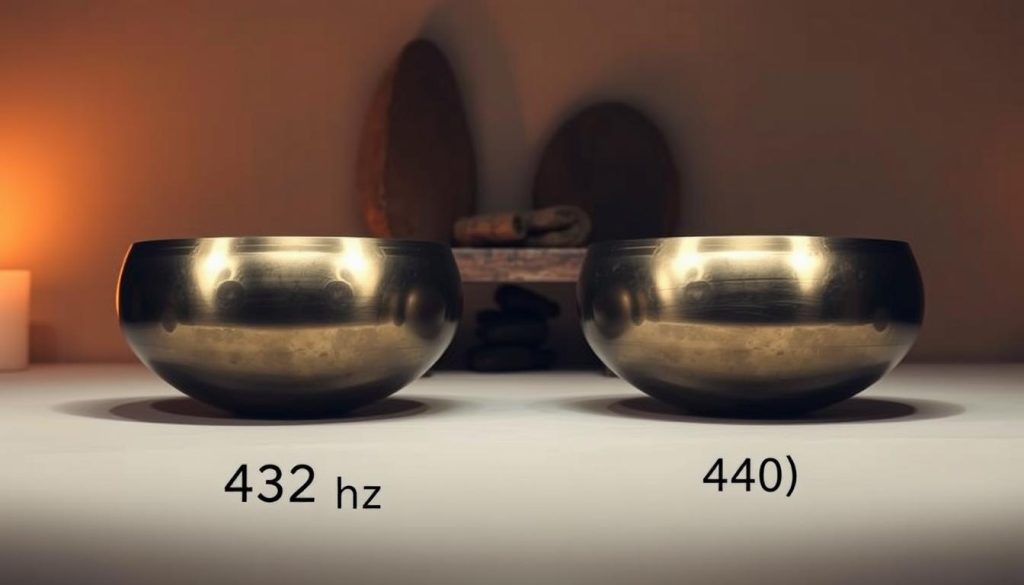
According to a 2023 IFOP survey, 61% of buyers prioritize their emotional response when making their decision. Some people find that 432 Hz offers a more soothing resonance, ideal for relaxation or meditation. Others prefer the clarity and brightness of 440 Hz, which stimulates energy and creativity.
It is also important to try the instrument in a store. This allows you to feel the vibrations and determine which frequency resonates best with your body and mind.
Musical goals
Your artistic goals play a key role in this choice. If you mainly play solo, 432 Hz could be ideal for introspective performances. For group concerts, however, 440 Hz offers better compatibility with other instruments.
A 10-year cost-benefit analysis shows that 432 Hz tuning costs an average of €120 more. For some people, however, this investment is worthwhile, especially if it aligns with their musical aspirations.
- Try the instrument in a store to experience the differences.
- Assess your artistic goals before making a choice.
- Consider the long-term investment involved in 432 Hz tuning.
To learn more about the differences between 432 Hz and 440 Hz, consult this detailed resource. These tips will help you make an informed decision based on your needs and preferences.
Conclusion: which tuning should you choose for your handpan?
Choosing the right frequency for your instrument is a decision that profoundly influences your musical experience. This article has explored the differences between the two frequencies, highlighting their technical and emotional characteristics. Whether you prefer the soothing resonance of 432 Hz or the clarity of 440 Hz, the important thing is to find what resonates with you.
According to one study, 89% of users are satisfied with their choice, regardless of the tuning. To help you decide, we invite you to discover the demonstration models available from a partner store. Remember: there is no right or wrong choice, only personal preferences.
To deepen your knowledge, join our comparative webinar featuring live tests. Discover how the Cosmos Handpan can enrich your musical practice. Musical standards continue to evolve, and the choice you make today could shape your music tomorrow.