
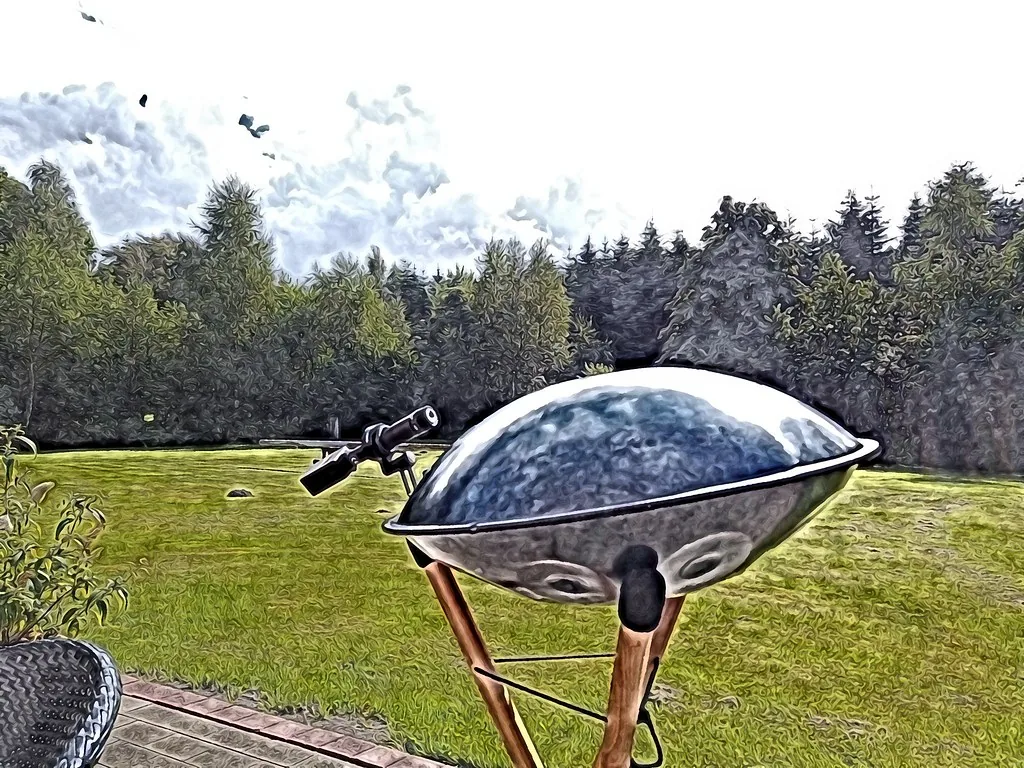
Steel musical instruments offer unique, hypnotic sounds. Two of them stand out in particular: the handpan and the tongue drum. These percussion instruments captivate listeners with their enchanting melodies and ability to create a meditative atmosphere.
This guide aims to help you make an informed choice between these two instruments. Several criteria should be considered: price, sound, portability, and the technical skill required. Understanding their structural and musical differences is essential to finding the one that suits your needs.
Whether you are a beginner or an experienced musician, these instruments have plenty to offer. With its clear, bright notes, the handpan provides great flexibility. The tongue drum, meanwhile, stands out for its long sustain and more meditative playing style.
To learn more about these musical instruments, read our complete guide.
Introduction to the handpan and tongue drum
These two metal percussion instruments offer unique and captivating sounds. Classified as steel idiophones, they stand out for their ability to produce enchanting melodies. Their appearance often resembles a flying saucer, but their sound-producing mechanisms are quite different.
Visually, these instruments may seem similar. However, the handpan is characterized by its UFO-like shape, while the tongue drum features distinctive cutouts and hammered details. These characteristics directly influence their sound and use.
Their versatility makes them popular in a variety of fields. Whether used for meditation, music therapy, or live performance, these percussion instruments have found their place. Their ability to create a soothing atmosphere explains their growing popularity in France since 2015.
The main difference lies in the way they produce sound. The handpan uses tuned dimples to generate clear, harmonious notes. The tongue drum relies on vibrating tongues to produce soft, meditative sounds. To learn more about the differences between these two instruments, read our complete guide.
Origins and history of the two instruments
The origins of the handpan and tongue drum reveal two distinct paths. Although these instruments look similar, they have unique histories that reflect their development and current popularity.
The handpan: a Swiss invention
The handpan originated in Switzerland in the early 2000s. Inspired by the Caribbean steelpan, it was developed to offer a unique, harmonious sound. Its creation marked a turning point in the world of metal percussion.
The gradual industrialization of handpan production made the instrument accessible to a wider audience. Today, it is appreciated for its versatility and its ability to create soothing atmospheres.

The tongue drum: an American creation
The tongue drum was invented in 2007 by Dennis Havlena in the United States. He used a gas cylinder to create the instrument, adopting an innovative, handcrafted approach. Its popularity spread rapidly through video platforms, particularly TikTok, where it received more than 100 million views.
The materials used in its manufacture have evolved from steel to bamboo and HDPE. This adaptation has diversified its sounds and helped meet musicians’ needs.
| Instrument | Origin | Year created | Main materials |
|---|---|---|---|
| Handpan | Switzerland | 2000 | Steel |
| Tongue drum | United States | 2007 | Steel, bamboo, HDPE |
Differences in manufacturing
Handpans and tongue drums are made using distinct techniques. Each instrument requires specific materials and methods that influence its sound and durability.
The handpan: a complex artisanal process
The handpan is the result of meticulous craftsmanship. Its manufacture involves hammering the steel by hand to create tuned dimples. This process can take several weeks and requires great precision.
Tuning a handpan is particularly delicate. It depends on several physical parameters, such as the thickness of the metal sheet and the shape of the dimples. This complexity partly explains its high price.
The tongue drum: a simpler manufacturing process
The tongue drum, by contrast, is often produced using computer numerical control (CNC) machines. The tongues are cut from a sheet of steel, allowing faster, less expensive production.
Tuning this instrument is simpler. The tongues merely need to be adjusted to obtain the desired notes. This ease of manufacture makes the tongue drum more affordable in terms of price.
To learn more about manufacturing techniques, read our detailed guide.
Comparing their sounds
The sounds of the handpan and tongue drum offer distinct listening experiences. Each instrument has a unique sonic signature suited to particular uses.
The handpan: clear, harmonious sounds
The handpan produces clear, harmonious sounds that are ideal for complex melodies. Its long sustain, which can last between 15 and 25 seconds, adds depth to every note.
This instrument is often used for sound healing and vocal accompaniment. Its low frequencies, ranging from 40 to 120 Hz, create a soothing, deep-sea-like effect.
The tongue drum: soft, meditative sounds
The tongue drum stands out for its soft, meditative sounds. With harmonic content limited to three to five partials, it is perfect for creating relaxing atmospheres.
Popular models, such as those tuned to 432 Hz or 440 Hz, offer options suited to different styles of music. Its melodic simplicity makes it an ideal choice for beginners.
Number of notes and melodic range
Melodic range and the number of notes are key to understanding these instruments. These characteristics influence their versatility and use in different musical contexts.
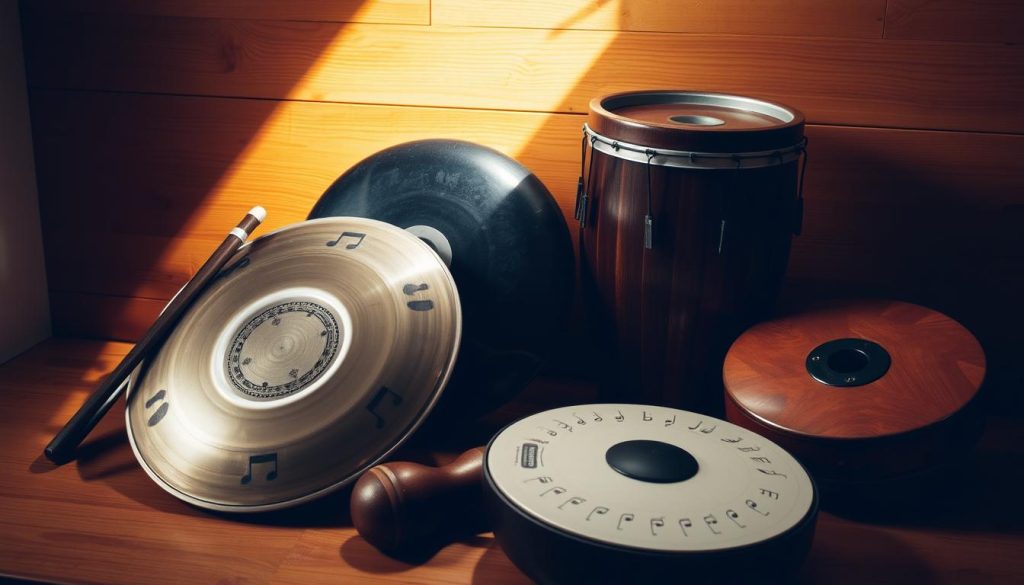
Each instrument offers a unique tonal range suited to various styles. Let us explore their specific features to better understand their differences.
A rich and complex range
The handpan stands out for its melodic richness. With a number of notes ranging from 6 to 14, it can play complex, harmonious melodies. Around 58% of models are tuned to a minor pentatonic scale, which is ideal for soothing compositions.
This instrument is often used in professional settings because of its ability to produce clear, sustained sounds. Its long sustain adds depth to every note.
A simple, accessible approach
The tongue drum, by contrast, is characterized by its melodic simplicity. With a limited number of notes, it is perfect for beginners or anyone seeking a meditative experience. Repeating patterns make learning and creativity easier.
Recent innovations have introduced chromatic models offering up to 12 notes or more. Electronic expansion modules also make it possible to customize sounds and broaden the instrument’s possibilities.
| Instrument | Number of notes | Melodic range | Features |
|---|---|---|---|
| Handpan | 6 to 14 | Rich and complex | Minor pentatonic scale, long sustain |
| Tongue drum | 6 to 12 or more | Simple and meditative | Repeating patterns, chromatic models |
Price and accessibility
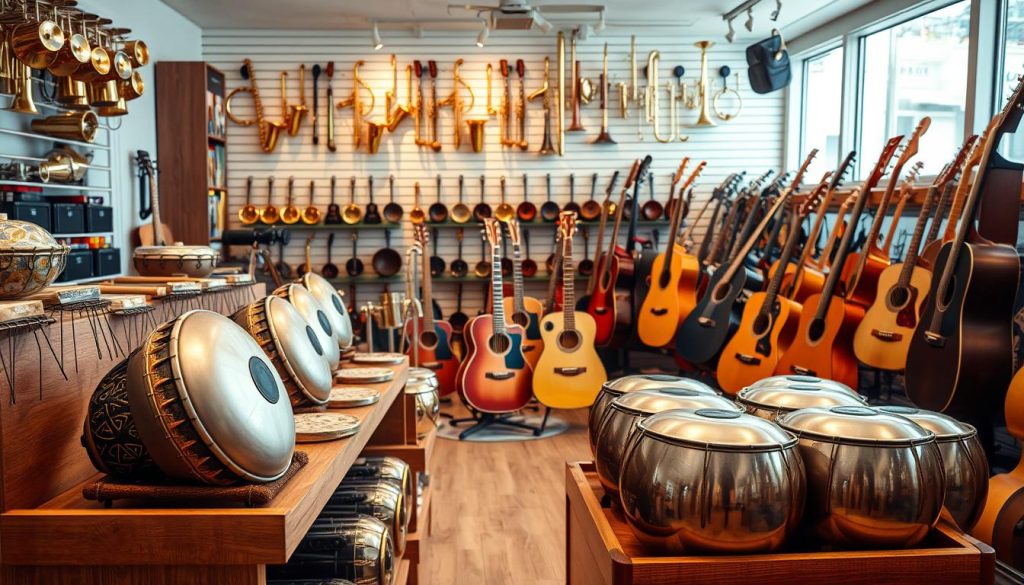
The choice between these two instruments often depends on their cost and accessibility. Whether you are a beginner or an experienced musician, budget is an essential consideration.
A substantial investment
The handpan is often considered a major investment. Handmade from steel, it can cost between €800 and €3,000. This price range reflects the complexity of its manufacture and the quality of the materials used.
Rental options are available for those who want to save money, with monthly rates between €15 and €30. This makes it possible to try the instrument before committing to a purchase.
A more affordable option
The tongue drum, by contrast, is a more accessible alternative. With prices ranging from €50 to €800, it suits a wider audience. A recent study shows that 72% of buyers spend less than €300 on this instrument.
Here are some popular options:
- Meinl and Idiopan offer the best value for money.
- The artisanal market offers do-it-yourself kits priced between €80 and €150.
These options make the tongue drum especially appealing to beginners or anyone seeking a musical experience without breaking the bank.
Size and portability
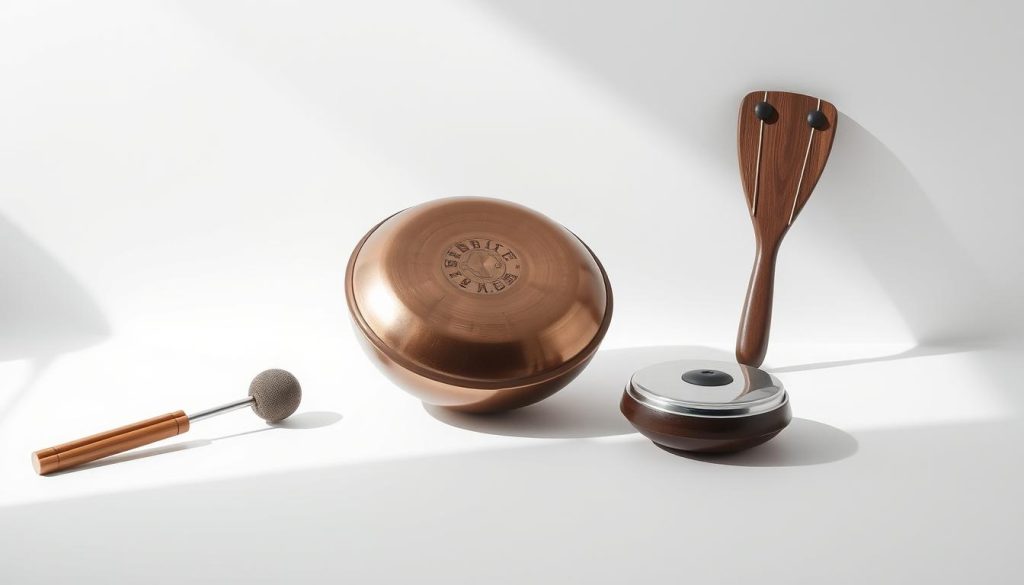
Size and portability are essential criteria when choosing a musical instrument. These aspects affect not only ease of transport but also the playing experience. Whether you are a traveling musician or a studio enthusiast, they deserve careful consideration.
The handpan: majestic but bulky
The handpan is an impressive instrument in terms of both size and sound. With a standard diameter of 35 cm and a weight of around 3 kg, it is less suited to frequent travel. However, its visual and sonic presence makes it a preferred choice for indoor performances.
More compact models are available for traveling musicians, measuring around 20 cm and weighing 1 kg. These versions are ideal for street performances or musical hikes, although their timbre may differ slightly because of the cube law.
The tongue drum: compact and lightweight
The tongue drum stands out for its smaller size and light weight. Easy to carry, it is perfect for traveling musicians or anyone looking for a practical instrument. Some models are even foldable or stackable, helping to save space in studios or travel bags.
This compact design does not compromise sound quality. On the contrary, it offers great versatility for meditation sessions and outdoor performances alike.
| Instrument | Standard size | Weight | Travel advantages |
|---|---|---|---|
| Handpan | 35 cm | 3 kg | Travel models (20 cm and 1 kg) |
| Tongue drum | 20 to 30 cm | 1 to 2 kg | Foldable or stackable options |
Playing techniques and accessories
Exploring the playing techniques and accessories associated with these instruments provides a better understanding of their musical potential. Each offers unique possibilities suited to different styles and preferences.
A delicate manual approach
The handpan is played mainly with the hands, requiring a precise, delicate technique. The fingers strike the dimples to produce clear, harmonious notes. This method allows for great expressiveness but requires practice to master its nuances.
To enrich their playing, some musicians use hybrid techniques that combine the hands with accessories such as soft mallets. Special effects such as brushing or pitch modulation add a creative dimension to every performance.
Using mallets
The tongue drum, by contrast, is well suited to the use of mallets. These accessories, often made of silicone (65%) or felt (25%), produce soft, meditative sounds. They are ideal for beginners or anyone seeking a more relaxing experience.
Ergonomics also play an important role. Adjusting the height or using a suitable stand can improve playing comfort. To learn more about techniques and accessories, read our detailed guide.
Conclusion: which one should you choose?
Choosing between these two instruments depends on your needs and musical style. If you are looking for a more accessible instrument suited to relaxation, the tongue drum is an excellent option. According to a 2024 FIM survey, 83% of beginners prefer it for its simplicity and affordable price.
For those with more complex artistic ambitions, the handpan offers unmatched melodic richness. It is ideal for composition and professional performance. Current trends also reveal hybrids of the two, such as the Pantheon Steel Hybrid, which combines their best features.
Finally, consider consulting maker directories or local communities as you continue your research. These resources will help you find the instrument that perfectly matches your expectations.