

Choosing a musical instrument is a decision that depends on many criteria. Among them, the scale and number of notes play an essential role. These elements directly influence the sound produced and the musical experience.
For musicians, understanding the differences between two versions of the same instrument is crucial. It helps you make a choice suited to your skill level and artistic aspirations. Experts such as ZenaPan and Handpan France emphasize the importance of these technical aspects.
Besides sound, other criteria such as sustain, materials, and tuning should be considered. These technical details can influence your final decision. Take the time to explore these nuances to find the instrument that suits you.
Introduction to the Handpan
Discover a unique musical instrument created in Switzerland in 2001. Made by PANArt’s Felix Rohner and Sabina Schärer, it quickly captivated the world of music. Its shape resembles a flying saucer, with two joined steel shells and a central note called the Ding.
This instrument has become popular in holistic practices such as meditation and yoga. Its soothing sound and ease of play make it an ideal choice, even for people who cannot read music.
Since PANArt stopped production in 2013, the market has evolved, with many makers offering a variety of versions. Today, it is valued for its therapeutic qualities and accessibility.
What Is a Handpan?
The handpan is a unique musical instrument that combines art and acoustics. Its distinctive design and mesmerizing sound make it a favorite among musicians and music lovers.
Origins and Evolution of the Handpan
Created in Switzerland in 2001, this instrument was developed by PANArt’s Felix Rohner and Sabina Schärer. Inspired by diverse musical traditions, it quickly evolved into a symbol of modernity and simplicity.
Since PANArt stopped production in 2013, many makers have taken up the torch. They offer improved versions while preserving the essence of the original. This evolution has expanded the range of scales and sound possibilities.
Handpan Structure and Operation
The handpan consists of two steel shells bonded together. The central note, called the Ding, is surrounded by several other harmoniously arranged notes. The Gu, a resonance opening, plays a key role in sound projection.
The manufacturing process is entirely handcrafted and takes about three months. It includes heat treatment and tuning by hand, ensuring that every instrument is unique. Material innovations, such as nitrided steel, have also enriched its sound.
9-Note vs. 10-Note Handpan: A Detailed Comparison
Exploring the nuances between two versions of an instrument can reveal subtle differences. The number of notes directly affects the sound, versatility, and complexity of learning. These aspects are essential when choosing a model suited to your needs.

Sound and Resonance
Harmonic density varies with the number of notes. A 10-note model offers a broader scale, enriching its melodic possibilities. By contrast, a 9-note model stands out for its simplicity and tonal clarity.
According to Handpan France, the ideal sustain is between 8 and 12 seconds. This characteristic influences the resonance and depth of the sound and should not be overlooked.
Versatility and Melodic Possibilities
A 10-note instrument provides greater creative freedom. Hybrid scales such as Celtic Minor or Hijaz open new horizons for advanced compositions. However, according to ZenaPan, a 9-note model—particularly in D minor—remains a popular choice for beginners.
Complexity and Learning
The learning curve is influenced by the number of notes. A 9-note model is often recommended for beginners because of its simplicity. A 10-note model, by contrast, requires more practice but offers greater versatility.
Musicians’ accounts confirm that the choice depends on your artistic aspirations and budget. ZenaPan recommends a 10-note model if your budget allows.
Which Scale Should You Choose for Your Handpan?
Selecting a scale for your instrument is a key step. It directly influences the emotion and depth of your music. With the different scales available, understanding their characteristics is essential to making an informed choice.
Major Scale vs. Minor Scale
The major scale is often associated with joy and optimism. It is ideal for stage performances or energetic compositions. The minor scale, by contrast, evokes introspection and melancholy, making it perfect for meditation or quiet moments.
According to Handpan France, 67% of beginners choose D minor. This scale offers a soothing sound and an accessible learning curve. To learn more about the different scales, see this complete guide.
Eastern and Exotic Scales
Eastern scales such as Hijaz create a distinctive Middle Eastern atmosphere. They are perfect for adding an exotic touch to your music. Other scales, such as Magic Hour, offer mystical and mesmerizing sounds.
ZenaPan recommends listening to audio comparisons before choosing. This provides a better understanding of the emotional impact of each scale. Take the time to explore these nuances and find the one that matches your style.
Handpan Frequency: 432 Hz or 440 Hz?
An instrument’s tuning frequency can transform the musical experience. For musicians, choosing between 432 Hz and 440 Hz is more than a technical matter. It affects resonance, emotion, and even compatibility with other instruments.

432 Hz: The Natural Frequency
The 432 Hz frequency is often described as natural. According to ZenaPan, it is aligned with the resonance of water, which accounts for its soothing effect. This frequency is widely used in music therapy for its healing properties.
- Effects on the autonomic nervous system: neuromusicology studies show a reduction in stress.
- Therapists’ accounts: 432 Hz promotes relaxation and deep meditation.
“432 Hz creates a harmonious connection between body and mind.” — ZenaPan
440 Hz: The International Standard
440 Hz has been the international standard since 1953. It is preferred for playing in an ensemble because it ensures optimal compatibility with most instruments. However, it may seem less natural than 432 Hz.
- Technical constraints: playing with instruments tuned to 432 Hz can create dissonance.
- Statistics: according to Handpan France, 60% of handpan sales in France are instruments tuned to 432 Hz.
Handpan Sustain: Understanding Resonance
Sustain is a key element that defines an instrument’s sonic personality. It influences the resonance and duration of notes, two essential considerations for musicians. According to Handpan France, optimal sustain lasts between 8 and 12 seconds, providing exceptional sound quality.
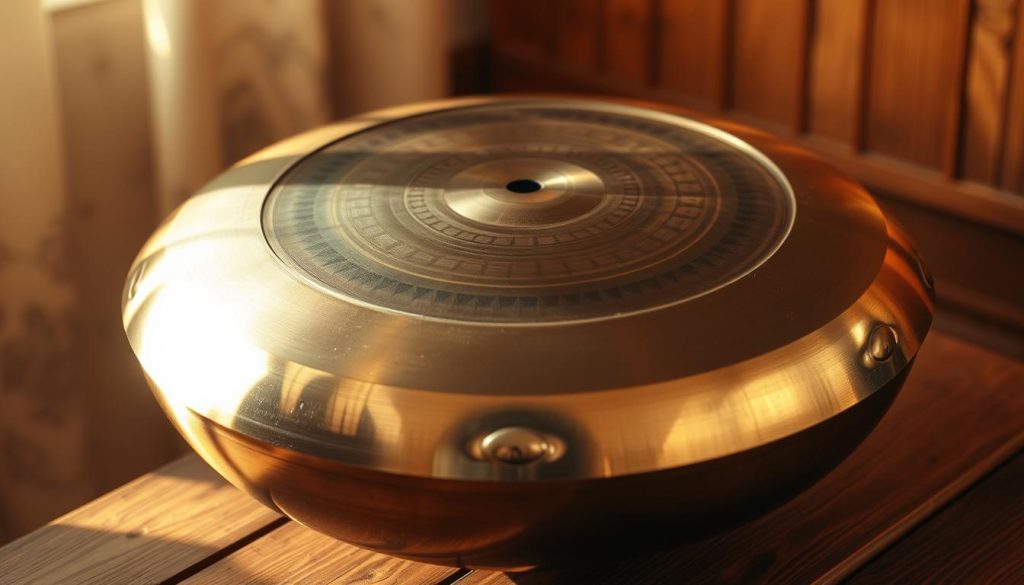
Short Sustain vs. Long Sustain
Short sustain is characterized by a rapid decay of the harmonics. It is ideal for rhythmic styles, where clarity and precision are paramount. Long sustain, by contrast, extends the resonance, creating a meditative and enveloping atmosphere.
A case study comparing Handpan France models with low-cost versions shows that material quality plays a crucial role in sustain duration. Premium instruments provide richer, longer-lasting sound projection.
Therapeutic Uses of Long Sustain
Long sustain is widely used in sophrology and stress management. Its prolonged resonance encourages synchronized breathing, helping people achieve a state of deep relaxation. Therapists often recommend this effect for meditation sessions.
To preserve sustain quality, it is essential to maintain your instrument regularly. Avoid impacts and temperature fluctuations, which can affect its duration and sound projection.
| Characteristic | Short sustain | Long sustain |
|---|---|---|
| Duration | Less than 8 seconds | 8 to 12 seconds |
| Playing style | Rhythmic | Meditative |
| Uses | Stage performances | Therapy and relaxation |
To learn more about the exceptional sound quality of handpans, see our complete guide.
Manufacturing Materials: Nitrided Steel vs. Stainless Steel
The choice of manufacturing materials directly affects your instrument’s sound quality and durability. Two main options stand out: nitrided steel and stainless steel. Each has unique characteristics suited to specific needs.
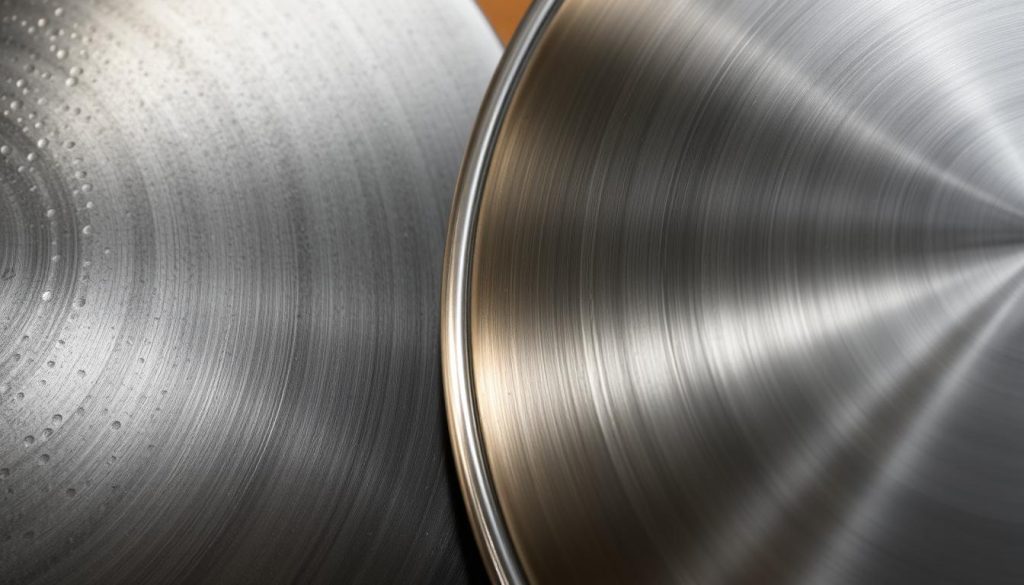
Nitrided Steel: Rich Sound and Deep Harmonics
Nitrided steel is prized for its rich sound and deep harmonics. This material provides exceptional resonance, making it ideal for musicians seeking superior sound quality. However, it requires specific maintenance to preserve its acoustic properties.
- Comparative analysis: spectrograms show greater harmonic density.
- Maintenance: use suitable products to prevent oxidation.
- Durability: users report optimal performance for more than 10 years.
Stainless Steel: Resistance and Easy Maintenance
Stainless steel stands out for its resistance to moisture and ease of maintenance. This material is particularly suitable for beginners because of its durability and ease of use. It is also recyclable, making it an environmentally friendly choice.
- Recommendation: ZenaPan recommends this material for new users.
- Environmental impact: high recyclability reduces its environmental footprint.
| Characteristic | Nitrided steel | Stainless steel |
|---|---|---|
| Sound | Rich and deep | Clear and crisp |
| Maintenance | Specialized products | Easy and inexpensive |
| Durability | 10 years or more | Moisture-resistant |
| Cost | 15% higher | Affordable |
How Many Notes Should You Choose for Your Handpan?
Determining the right number of notes for your instrument is a crucial decision. It affects not only the sound but also ease of learning and versatility. According to Handpan France, 70% of first-time buyers choose a 9-note model, which combines simplicity and accessibility.
Ideal for Beginners
A 9-note instrument is often recommended for beginners. Its ergonomic layout makes it easy to handle and allows players to explore tones progressively. According to one study, musical needs often evolve after two years of practice, making this an excellent starting point.
- Ease of learning: fewer notes mean a gentler learning curve.
- Financing option: ZenaPan offers six interest-free installments for this model.
Greater Versatility
For those seeking greater creative freedom, a 10-note model is an excellent option. It offers an extended scale, ideal for complex compositions and improvisation. Experts emphasize that this choice offers a balance between complexity and creativity.
“A 10-note instrument opens up unexplored melodic horizons.” — ZenaPan
To learn more about the criteria to consider, see this complete guide.
Handpan Prices: What You Need to Know
Investing in a musical instrument such as a handpan requires a clear understanding of pricing factors. Prices can range from €700 to €3,500, depending on brands such as ZenaPan. Several key factors account for these differences.
Factors That Influence Price
The price of a handpan depends mainly on labor and materials. Handcrafting accounts for around 60% of the total cost, while quality materials account for 25%. Production lead times, which can reach three years, also influence the final price.
A certificate of authenticity is an essential indicator of quality. It guarantees that the instrument meets acoustic and technical standards. Reputable brands often include this document to reassure buyers.
How to Avoid Unpleasant Surprises
The secondhand market can present risks such as counterfeits and scams. To minimize these dangers, favor recognized sellers and check their warranties. A minimum two-year warranty is recommended to protect your handpan purchase.
It is also advisable to compare offers from the leading brands. A comparison table can help you assess the price-to-performance ratio.
| Brand | Average price | Warranty | Production time |
|---|---|---|---|
| ZenaPan | €2,500 | 2 years | 12 months |
| Handpan France | €3,000 | 3 years | 18 months |
| Other makers | €700–€1,500 | 1 year | 6 months |
In summary, understanding price factors and potential risks will help you make an informed handpan purchase. Take the time to compare options and check warranties to maximize your investment.
Tips for Choosing Your First Handpan
To choose the right instrument, it is essential to follow a few practical tips. These suggestions will help you avoid common pitfalls and get the most from your musical experience.
Try Before You Buy
One of the most important steps is testing the instrument in person. Specialist stores such as Woodbrass or Percussions du Monde offer in-store trials. This lets you check crosstalk and harmonic balance, two essential criteria for achieving quality sound.
Online communities, such as forums or Facebook groups, can also guide you. They share feedback based on experience and alerts about flash sales or specialist festivals.
Choose a Trusted Maker
A maker’s reputation is a mark of quality. Consult platforms such as Handpanmaster for a list of certified makers. Also check the return policy—ideally 14 days—to make your handpan selection process more secure.
- Buying checklist: sound, materials, tuning, warranty, and price.
- The importance of in-store trials for assessing resonance.
- The role of online communities in obtaining reliable recommendations.
By following these tips, you will be better prepared to make an informed choice and fully enjoy your instrument.
Caring for and Maintaining Your Handpan
Caring for your instrument is essential to ensure its longevity and performance. Proper maintenance preserves sound quality and prevents damage from wear or environmental conditions.
Cleaning and Protection
A monthly cleaning routine is recommended to keep your instrument in perfect condition. Use a microfiber cloth to remove dust and fingerprints after each use. Avoid harsh solvents that could damage the steel surface.
Apply a suitable oil, such as coconut oil or baby oil, every 2 to 4 weeks. This protects the instrument against rust and extends its service life.
Storage and Transport
Storage is a crucial aspect of maintenance. Use a temperature-controlled case to protect your instrument from fluctuations in temperature and humidity. Avoid leaving it in a backpack or anywhere exposed to a direct heat source.
A hard case is essential for transport. It protects the instrument from impacts and scratches, especially during air travel. Also consider taking out dedicated insurance to cover possible damage.
- Avoid direct sunlight to prevent detuning.
- Play only with your fingers to avoid microscratches.
- Professional retuning is recommended every 3 years.
By following these tips, you will ensure an optimal service life for your instrument and enjoy its full performance.
Conclusion: Which Handpan Is Right for You?
Finding the instrument that suits your needs requires careful thought. The choice depends on factors such as the number of notes and your budget. A simple model is often recommended for beginners, while experienced musicians may choose more complex versions.
The in-store sensory experience is essential. It allows you to feel the resonance and ease of play. Feel free to try several models to find the one that inspires you.
If you want to progress, resources such as ZenaPan tutorials can guide you. To learn more about the number of notes, see our complete guide.
Finally, take advantage of our free trial offer by appointment. It is the perfect opportunity to enjoy a unique experience and make your handpan selection a success.